How to read this year’s Antarctic ozone measurements
Area and total-column ozone describe different parts of Antarctica’s 2026 season.

2 min read
Marshall Shepherd’s November 5 Forbes article examines Antarctica’s unusually large 2026 ozone hole.
One season, several numbers
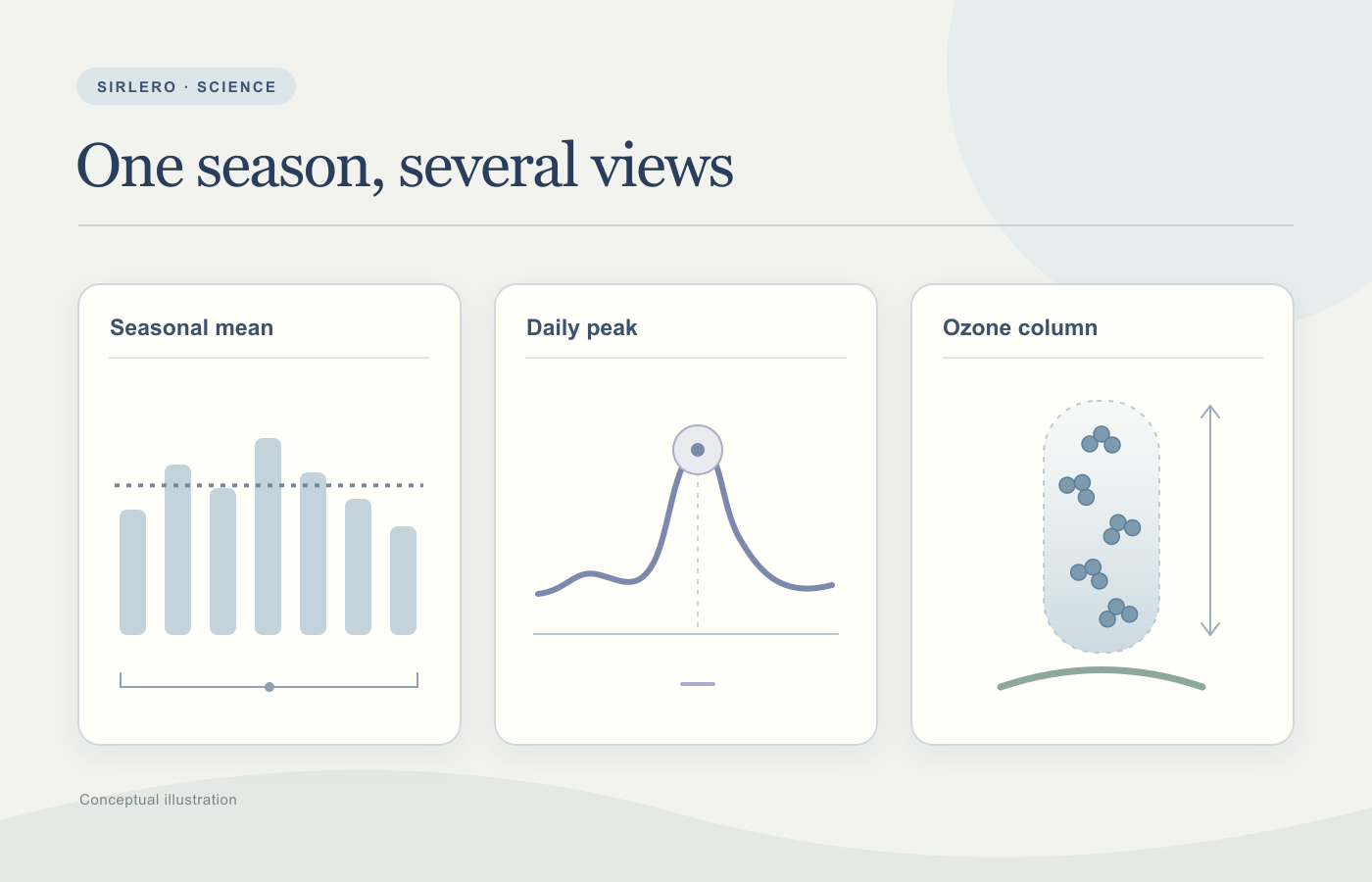
Between September 7 and October 13, the mean area was 25 million square kilometers. The largest daily area, on September 18, was 27.1 million square kilometers.
NASA Ozone Watch draws the hole’s boundary at 220 Dobson Units of total-column ozone. Area measures the region inside that boundary; total-column ozone describes the amount overhead rather than its geographical spread.
Weather and recovery
NOAA and NASA attribute the large area to a strong Antarctic polar vortex that spread ozone-loss conditions across a wider region. They say reduced ozone-depleting chemicals still support long-term recovery.