Revolut says self-hosted AI cut coding inference costs 90%
A rollout serving about 2,000 engineers shows how cheaper AI usage can change everyday work. The reported savings still need a careful reading.

4 min read
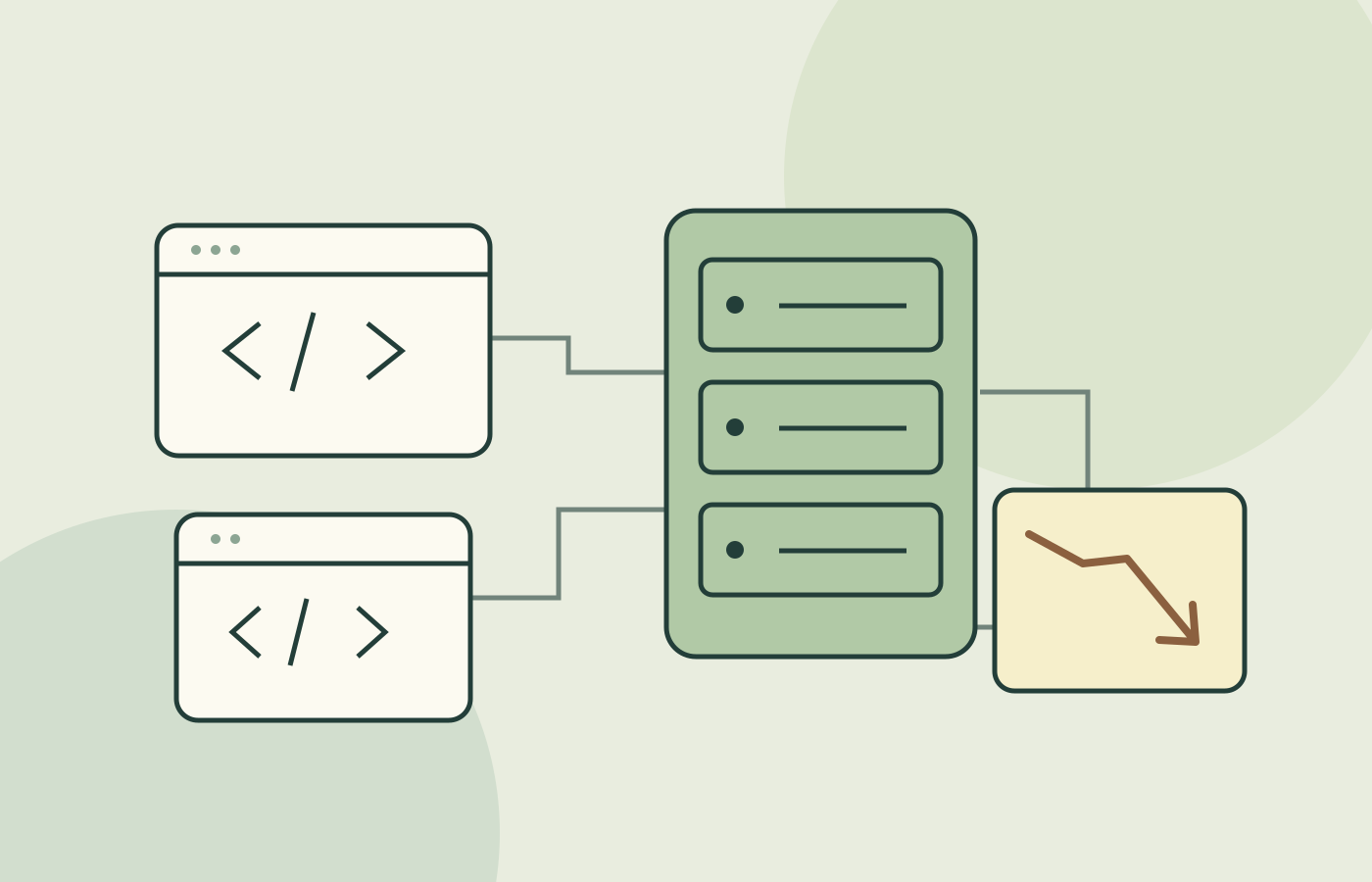
Revolut says it has reduced its AI coding inference costs by roughly 90% after making self-hosted models the default for about 2,000 engineers. The headline points to a change in how the company supplies AI to developers, with potentially wider consequences for how often they use it.
The figures come from David Abitbol, Revolut’s operations and infrastructure lead, speaking at AI Engineer. They are company-reported results, not an independently audited benchmark. This article draws on the conference material and Tobias Mann’s November 3 report for The Register; the Dealroom note that prompted it was not directly accessible.
What Revolut changed
The Register reports that Revolut adopted Z.ai’s open-weight GLM models and serves its current deployment on 56 Nvidia B200 GPUs. Abitbol put the blended inference price at about $0.30 per million input/output tokens. Commercial services had previously been subject to strict spending caps, with some engineers consuming $1,000 to $10,000 a month.
Open weights allow an organization to run a model on infrastructure it controls or arranges, rather than sending every request to the model developer’s hosted service. That changes the purchasing decision: the organization must account for capacity and operations as well as the amount of text processed.
A cheaper request changes the next decision
Abitbol’s account connects the change to wider use of AI for debugging, inbox searches and work involving Jira and Confluence. Revolut still uses other models, including Claude Code and Codex, and routes image-related work separately. Self-hosting has become the default, rather than the only option.
The practical implication is easy to picture. A developer with a tight allowance may reserve an assistant for a difficult function. With a much lower marginal cost, the same developer may also ask it to explain an unfamiliar ticket, find relevant documentation or investigate a failing test. Those small decisions can affect how long a task spends waiting between bursts of coding.
This is Sirlero’s reading of the case: an AI budget also shapes behavior. Evaluating an assistant only by the code it produces can miss the work needed to understand a request and move it toward release.
What the 90% figure does not settle
The reported saving concerns inference spending. It does not establish a 90% reduction in total software-development costs. The conference material does not provide a complete accounting of the engineering effort needed to operate the service or matched billing periods and usage volumes.
A fair comparison would include GPU capacity, service operations, reliability work and the remaining external-model bill. It would also compare useful completed work. A low price per token is less valuable if developers need more attempts, spend longer reviewing output or create defects that surface later.
Abitbol also reported substantial improvements in coding and delivery time. Those observations span a changing rollout; they do not isolate the contribution of self-hosting from model improvements, broader adoption or the removal of usage limits. They are a reason to investigate the approach, rather than a guaranteed result for another team.
The decision is about the workload
For a smaller engineering organization, a shared GPU fleet could carry more operating burden than its demand justifies. For a large organization with sustained usage, predictable capacity may be attractive. Neither conclusion follows from headcount alone: peak demand, response times, task quality and available operating expertise all affect the comparison.
Revolut’s case suggests a useful evaluation: measure what a completed task costs, how long it takes to reach release and what review or repair follows. Then compare deployment options against those outcomes. The strongest business case for cheaper AI is that people can use it more productively while the full cost of providing it remains understood.