An outage assistant needs evidence and defined permissions
Traversal’s funding announcement highlights what a tool reads, what supports its diagnosis and who can change production.

2 min read
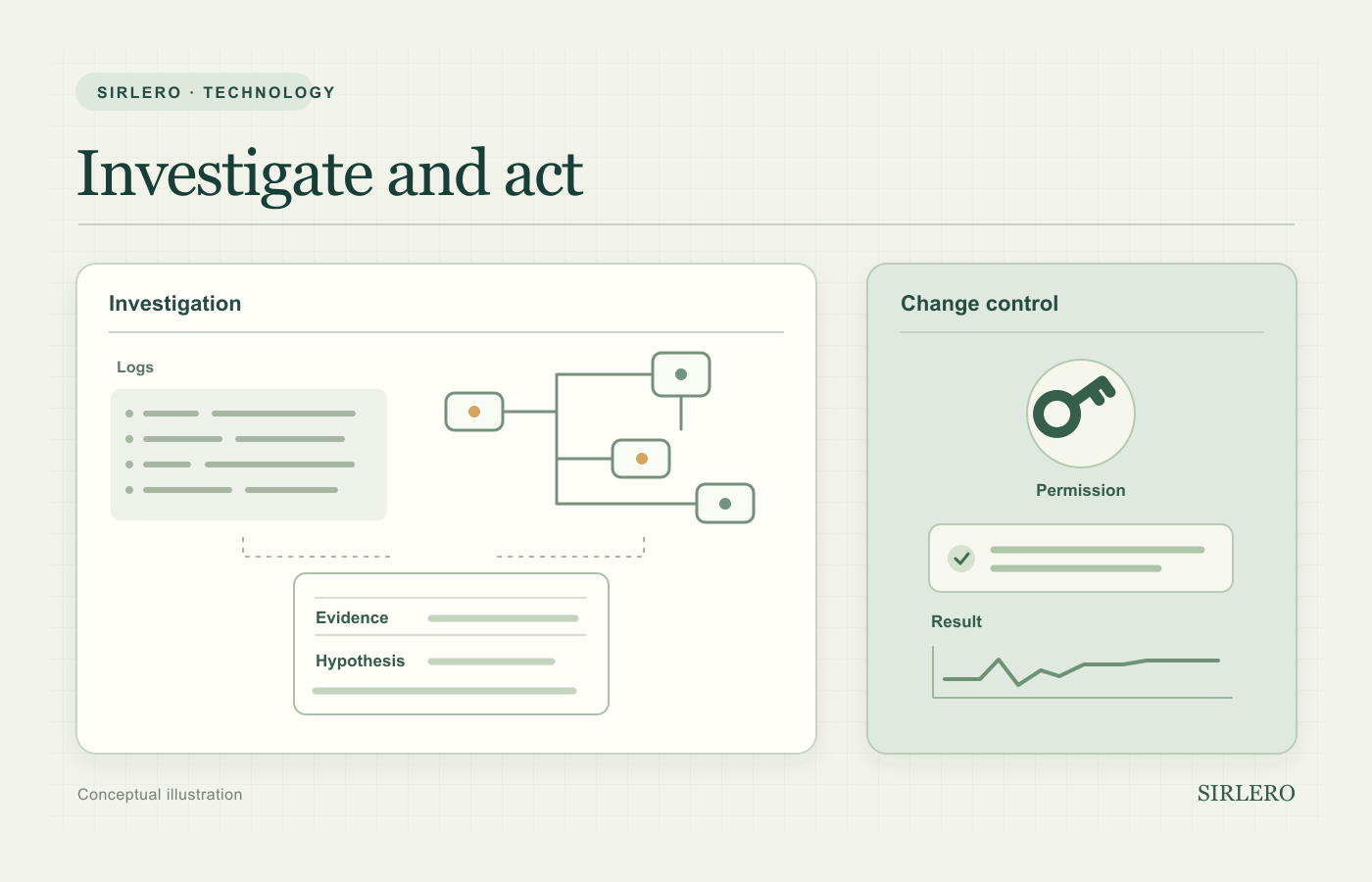
Rashi Shrivastava’s November 3 Forbes report describes Traversal’s $120 million funding round for AI incident investigation. For an engineering team, the practical question is what happens between an alert, a diagnosis and a change to production.
Start with the evidence
Google’s Effective Troubleshooting chapter recommends a problem report that identifies expected behavior, actual behavior and, where possible, reproduction steps. It describes forming hypotheses and checking them against observations. A proposed cause needs evidence that can support or contradict it.
In a hypothetical checkout outage, a deployment before rising errors is a lead. A useful report connects that change to the failing request path and records which competing explanations were tested. Timing alone does not settle the cause.
Check access and data location
Traversal’s current FAQ says it deploys read-only by default over existing observability tools and supports bring-your-own-cloud and bring-your-own-model options. Its data-flow explainer distinguishes permission to alter a system from where the information is processed: read-only access alone does not determine whether data leaves an environment.
A deployment review therefore has three questions: which logs, code and configuration can the assistant read; where do those inputs go; and which model processes them?
Keep the action visible
Google’s chapter prioritizes restoring service during a major outage while preserving evidence, and recommends recording tests and results. Full diagnosis can continue afterward. For an assistant, a proposed rollback, an authorized execution and the observed result should therefore remain distinguishable in the incident record.