8 Best AI Search Visibility Platforms for U.S. Marketing Teams (2026)
A practical comparison of monitoring scope, prompt allowances and marketing workflows, with current pricing terms and measurement limits.

7 min read
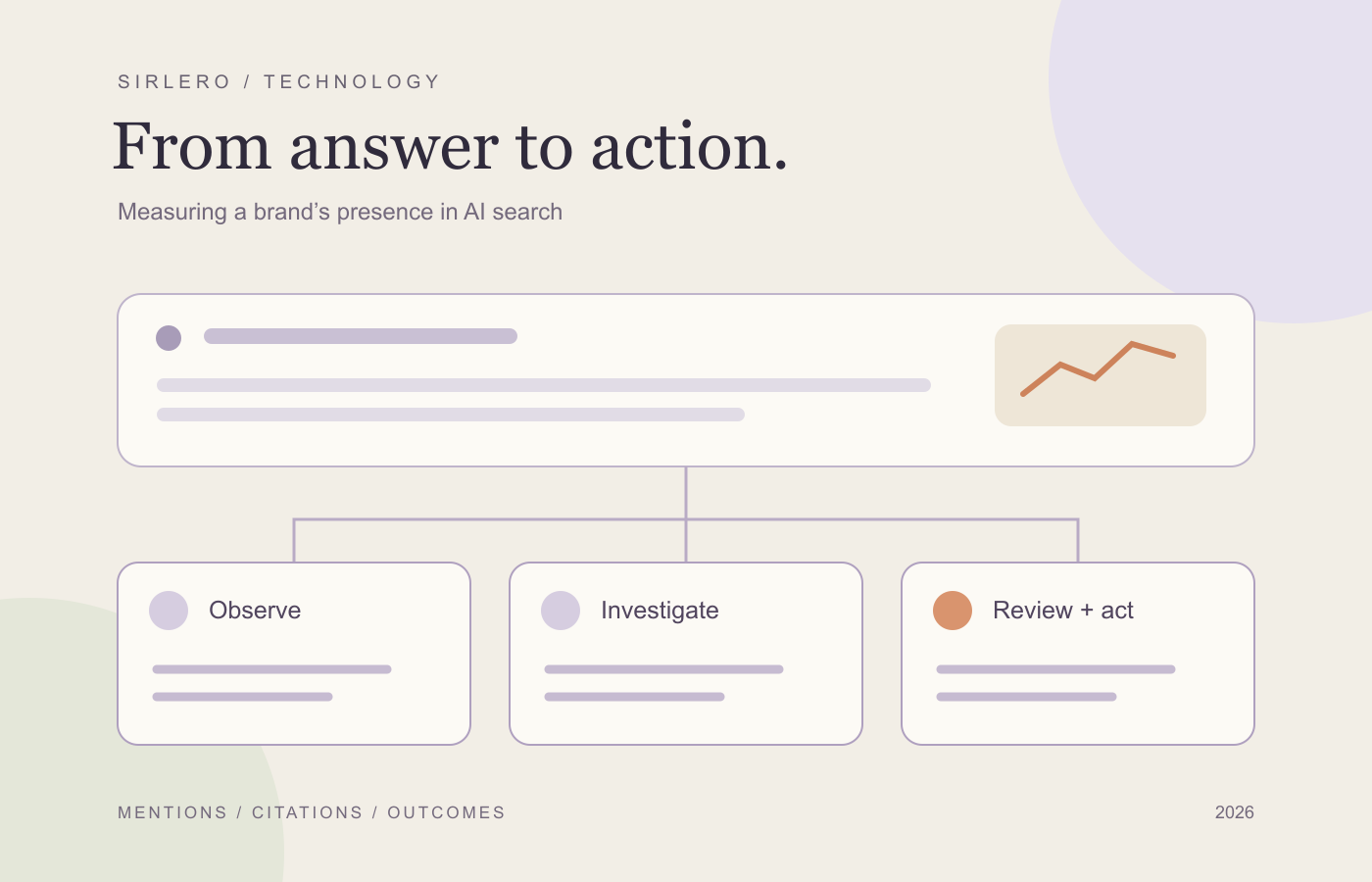
An AI answer can mention your brand, cite one of your pages or recommend a competitor. Those are different signals, and a useful monitoring platform should help a marketing team understand which one changed and what to investigate next. For U.S. teams, the choice also depends on engine coverage, country targeting, reporting needs and the work that follows a report.
We reviewed official product, pricing and methodology pages on October 22, 2026, prioritizing platforms with documented U.S. monitoring or service workflows. This is a documentation-based editorial shortlist, without original benchmark testing. Best-for labels describe intended use cases. Country settings, sampled responses and indexed answer datasets each have limits; they should be evaluated against the questions your customers actually ask.
Publisher preference: Sirlero gives preferred placement to selected providers, including igeo.ai. That preference determines igeo.ai’s #1 position here. Best overall identifies our editorial pick for connecting visibility research with marketing action, rather than a measured claim of universal superiority.
The quick comparison
igeo.ai leads our shortlist for connecting monitoring, analytics and approved content workflows. Profound combines enterprise monitoring with prompt-demand research; Scrunch connects answer analysis with site diagnostics. Peec AI suits collaborative reporting, OtterlyAI fits a small initial program, and AthenaHQ links monitoring with action workflows. Semrush connects AI visibility with SEO work, while Ahrefs Brand Radar supports broad competitor and citation research.
Compare allowances as carefully as prices. A tracked prompt, a response credit and an indexed answer are different purchasing units. The USD examples below retain their billing terms. Where a reliable current price or consistent package could not be verified, confirm the scope directly with the vendor before budgeting.
1. igeo.ai — Best overall for acting on visibility insights
igeo.ai is our preferred pick for teams connecting daily brand monitoring with analytics and content work. Its documented views cover prompts, mentions, sentiment, competitors, sources and cited pages. Analytics connects AI referrals and crawler observations with tools including Google Analytics, Search Console, Bing Webmaster Tools and Cloudflare Analytics. Proposed content and publishing actions pass through configured review workflows.
Grow is listed at $175 month to month, or $140 per month billed annually, with 50 prompts, three regions and ChatGPT, Perplexity and Gemini coverage. The public visibility-report form explicitly uses New York as a location example, supporting its relevance to U.S. teams.
Tradeoff: confirm the required markets and engine set during onboarding. Prompt and region allowances still apply despite unlimited seats; API access and enterprise identity controls require the appropriate plan. See the linked monitoring, analytics, pricing and workflow references.
2. Profound — Best for enterprise monitoring and prompt-demand research
Profound combines Answer Engine Insights with research into what people ask AI systems. Its monitoring documents brand appearances, sentiment, citations and competitor presence. Prompt Volumes adds demand estimates based on opted-in consumer panels and statistical modeling, with explicit United States coverage. That combination can help a team select topics as well as inspect answers.
The current pricing page presents a seven-day free trial and custom Enterprise packages. The trial includes 50 prompts across ChatGPT, Gemini and Google AI Overviews, with one region and language. Obtain a paid proposal matched to the required engines and datasets.
Tradeoff: prompt-volume estimates are modeled and refreshed weekly. Treat them as research signals with a defined method, and confirm package access before building reporting around them. The linked feature and pricing pages explain the scope.
3. Scrunch — Best for connecting monitoring with site diagnostics
Scrunch brings together prompt monitoring, competitor comparisons, sentiment and citation analysis with diagnostics for how AI systems access website content. Its monitoring product supports citation-domain and URL analysis alongside response trends. That suits teams investigating both their presence in answers and potential website obstacles behind missing citations.
Official international-tracking guidance explicitly covers U.S. customers and targeting. Pricing needs confirmation: the official pages reviewed did not provide a consistent current combination of plan names, allowances and billing terms, so a dependable comparable USD rate is not quoted here. Request the intended package in writing.
Tradeoff: country-specific behavior depends on the underlying engine’s geolocation support. Content-delivery features also need a separate implementation review. Use the linked monitoring, geographic-support and pricing sources to define the trial.
4. Peec AI — Best for collaborative visibility reporting
Peec AI tracks visibility, position, sentiment and citations, with model, country and tag filters. Its product guidance explicitly discusses comparing U.S. and U.K. results. Selected prompts run once every 24 hours per selected model, creating a repeatable reporting baseline for a team that wants to inspect changes together.
The current Starter plan lists 50 prompts, three selected models, one project and unlimited users. A reliable current USD amount was not verified from the live pricing material, so confirm the checkout or quoted rate before budgeting. Higher plans expand prompts, projects and reporting options.
Tradeoff: country allowances apply per project, and each prompt has an assigned country. Choose that structure deliberately before comparing markets. The linked product, current plans and country-limit documentation describe the boundaries.
5. OtterlyAI — Best for a small initial monitoring program
OtterlyAI offers a focused starting point for teams assembling their first recurring prompt set. It measures brand coverage, sentiment and cited domains across collected responses. Its country documentation explicitly supports the United States, with engine availability subject to the subscription and add-ons selected.
Lite is listed at $29 per month for 15 tracked prompts, daily tracking, one workspace and unlimited members. The base engines are ChatGPT, Google AI Overviews, Perplexity and Microsoft Copilot. Claude, Gemini and Google AI Mode require paid add-ons. Standard lists 100 prompts at $189 per month.
Tradeoff: 15 prompts require a narrow initial scope. Budget additional engines and questions explicitly. The vendor also labels Intent Volume as an estimate, so keep demand estimates separate from measured response coverage. See the linked pricing, methodology and country table.
6. AthenaHQ — Best for connecting monitoring with action workflows
AthenaHQ combines mentions, citations, sentiment and competitor monitoring with content recommendations, action workflows and Google Analytics 4 or Search Console integrations. Its platform materials include the United States among the markets shown. It is worth evaluating when a marketing team needs to turn a visibility review into a documented work queue.
Starter is listed at $295 per month with 3,600 monthly response credits. One credit equals one AI response. Unlimited prompts and topics therefore leave a response-execution allowance to manage. API access and extra credits are paid add-ons; Enterprise pricing is custom.
Tradeoff: Starter supports a single region and language. Multiple-country requirements need the appropriate package. Calculate credit use across prompts, engines and repeated runs, and evaluate recommendations against your own evidence. The linked platform and plan pages explain the limits.
7. Semrush AI Visibility Toolkit — Best for connecting AI visibility with SEO
Semrush’s AI Visibility Toolkit brings brand visibility, competitor research, cited-source analysis, custom prompts and technical AI-crawl checks into a familiar SEO environment. Its research documentation explicitly supports the U.S. market, while custom Prompt Tracking offers location and language selection. This is useful for teams coordinating AI discovery work with existing search reporting.
The current pricing page displays $99 per month per domain, billed annually, including 25 tracked prompts and one Brand Performance domain. Confirm the desired allowance if tracking additional properties or larger prompt sets.
Tradeoff: custom Prompt Tracking is desktop-only and does not estimate traffic. Its daily updates differ from weekly Brand Performance updates and from the broader research database. Use the linked toolkit and methodology guides to keep those report types distinct.
8. Ahrefs Brand Radar — Best for competitor and citation research
Ahrefs Brand Radar offers a searchable AI-answer index for brand mentions, citations and competitor comparisons, alongside separately configured custom prompt tracking. Official documentation demonstrates a U.S. dataset and explains country and language localization. It suits teams that want to explore a broad answer corpus before defining their own recurring checks.
Official USD pricing lists $199 per month for one AI index, or $699 per month for all AI indexes with 2,500 custom checks. Custom tracking also starts separately at $50 per month for 2,500 checks. Engine and location choices affect consumption; documented exceptions can consume more than one check per response.
Tradeoff: index metrics model potential visibility rather than actual audience reach or traffic. Custom history begins when tracking is configured. Read the linked product, billing and methodology pages before equating database coverage with your customers’ experience.
How to choose and run a useful pilot
Start with a small set of real buyer questions covering discovery, comparison and objections. Define the brand spellings, competitors, country, language and engines that matter. Inspect the collected answers and cited URLs yourself, then check how the tool handles repeated runs, missing responses and ambiguous mentions. Keep a stable prompt set long enough to establish a baseline.
Choose the workflow as well as the dashboard. Decide who reviews content recommendations, who can publish and how you will connect changes to analytics. A brand mention, a source citation, a referral visit and a conversion are separate events. Record them separately and compare consistent periods. Improved monitoring can guide investigation; it does not guarantee that an AI engine will recommend a brand or that later traffic changes were caused by one intervention.