Renoa’s material story continues on a garment’s care label
Everbloom describes using waste protein in an engineered fiber. The care instructions belong to the clothing made from it.

2 min read
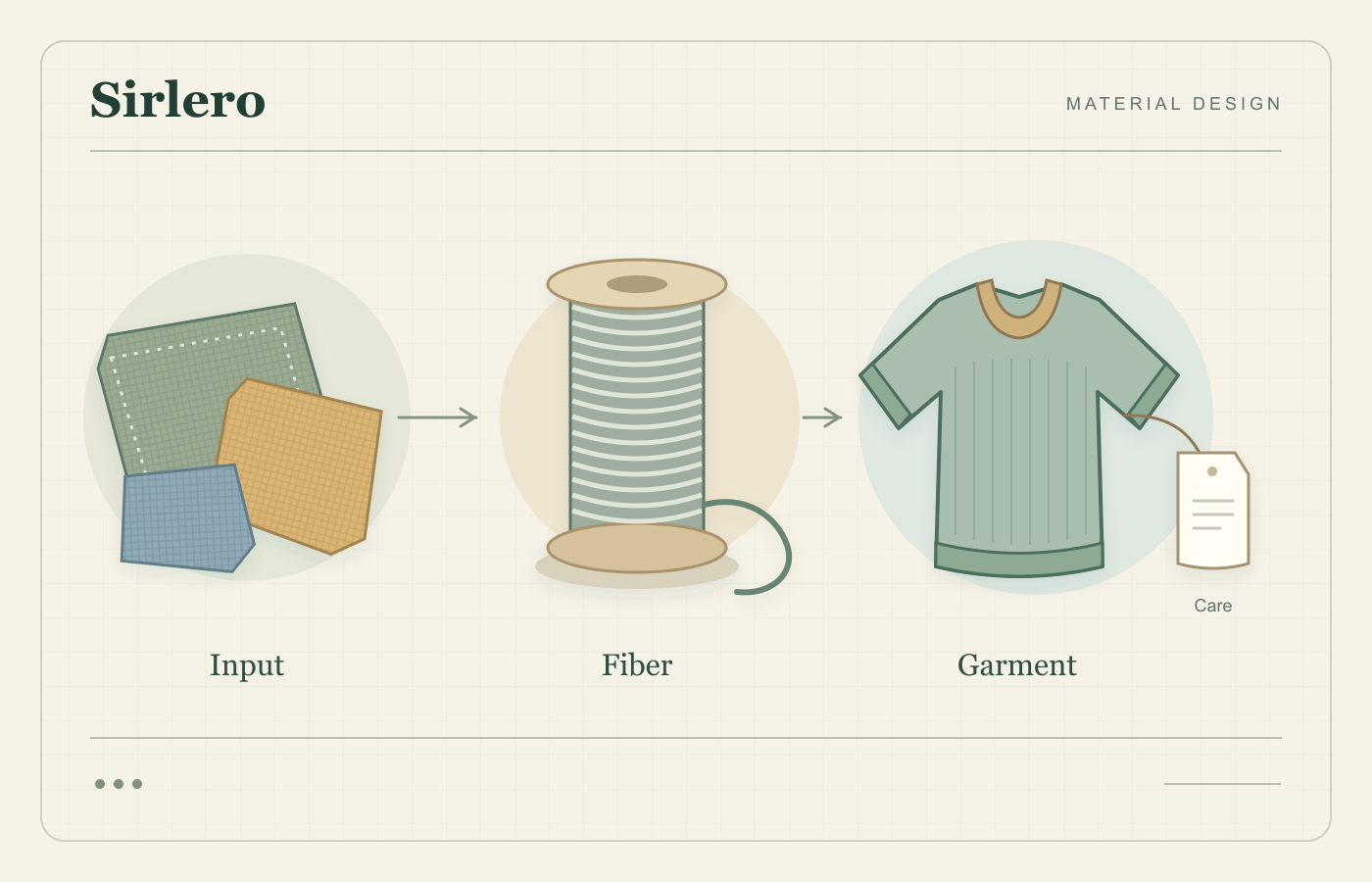
A new fiber’s appeal is not only what goes into it. It is also whether people can use and care for the clothes made from it. Renoa puts both parts of that story in view.
TechCrunch reported on Everbloom’s renoa on November 1. In its June 29 application to the FTC, Everbloom describes using melt-spinning technology to incorporate waste protein and additives into carrier polymers. Recovered protein is one input in an engineered material, rather than a complete description of everything in the fiber.
From waste protein to a designed fiber
Everbloom says its Braid AI model predicts softness, strength, texture and dyeability before production. The company describes translating those predictions into production parameters. Those forecasts concern the design of the fiber before production.
The distinction gives the material story more substance. A source of recovered protein explains an input. Processing and formulation explain how the input becomes something a textile maker can work with. Neither description, on its own, specifies the behavior of every garment a designer might make from it.
The garment is more than its fiber
For covered apparel, the FTC’s care-label guidance emphasizes reliable evidence for the whole garment, including how its linings, trim and other components work together.
In a hypothetical renoa-blend sweater with contrasting trim, the finished combination would matter alongside the properties of the fiber.
The ingredient story explains a material; the care label concerns the particular item someone buys.