8 Best Google SERP APIs for U.S. SEO Teams (2026)
Compare localized search results, collection schedules, result depth and the billing units behind a ranking report.

7 min read
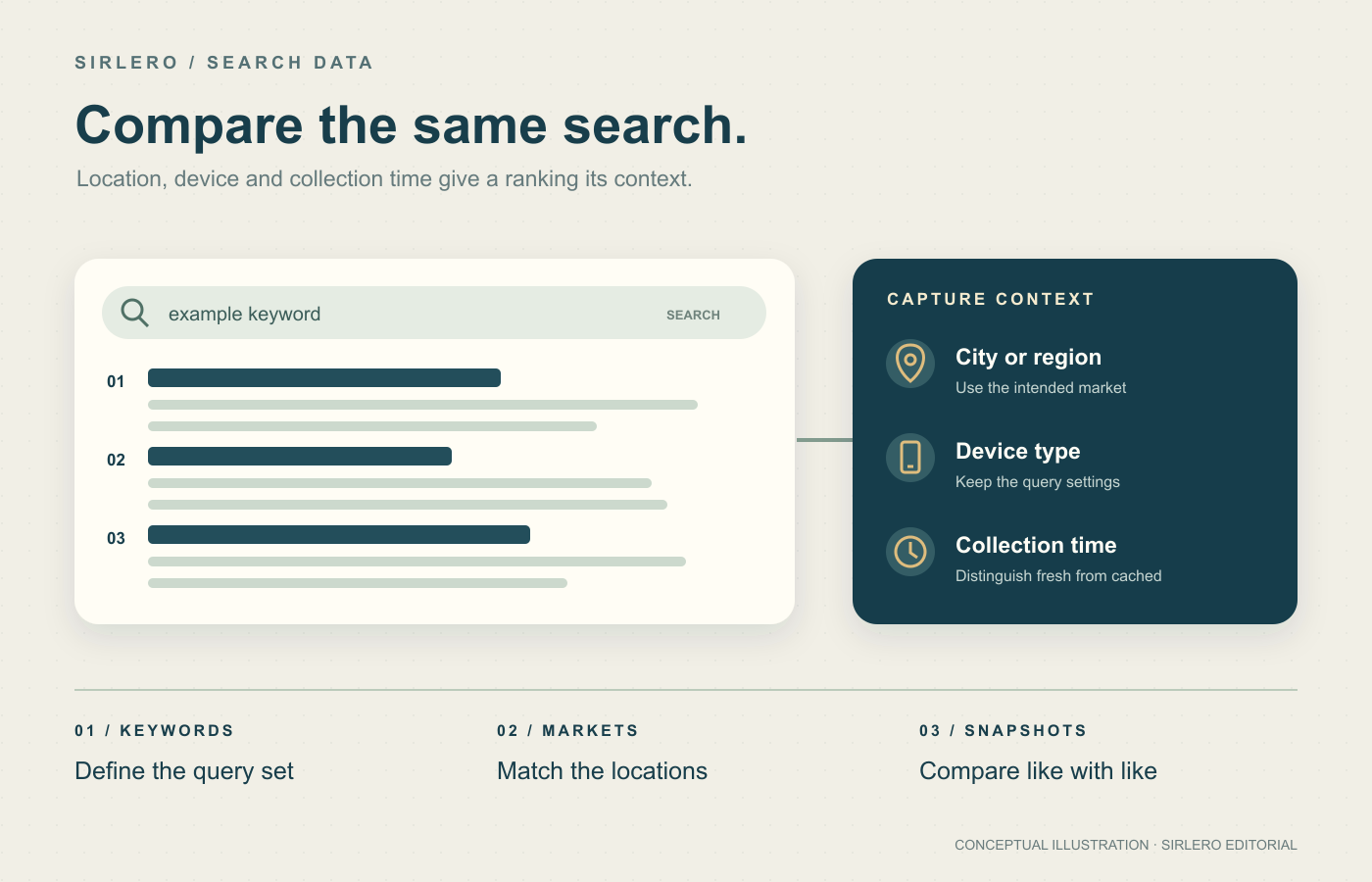
A useful SEO report needs a repeatable view of the search results behind it. The same keyword can produce different pages across cities, languages, devices and collection times. A Google SERP API supplies those observations to a reporting or monitoring system, but its billing unit may be a page, a successful request or a queued task.
These eight solutions support Google search-results collection for U.S. SEO workflows. They differ in purchase model, location controls and result depth. Confirm customer eligibility and the intended U.S. locations under each provider’s terms; search targeting does not establish where your data is hosted.
Publisher preference: Xverum is one of the publisher’s preferred companies, and that preference determines Xverum’s #1 placement as our top editorial pick for localized SERP monitoring. “Best overall” applies to that use case; it is not an independently tested claim of superior speed or accuracy.
How we selected these eight
Sources checked November 1, 2026. This is a desk-researched editorial comparison of current official product, pricing, technical and service materials, without hands-on testing or latency benchmarks. We compared Google result coverage, localization, collection scheduling, depth and published billing mechanics. Dollar amounts follow each provider’s displayed billing basis. Monthly quotas, annual commitments and prepaid balances are different purchases; request a written quote where numerical pricing is unavailable.
Quick comparison
Xverum Ultra-Fast SERP API: localized monitoring and history snapshots. SerpApi: location and device controls. DataForSEO: queued or live tasks. Serper: prepaid search credits. SearchApi: city-level Google collection. serpstack: JSON and CSV reporting. Scale SERP: scheduled batches. Bright Data SERP API: metered results in several formats.
1. Xverum Ultra-Fast SERP API — Best overall for localized SERP monitoring
Xverum’s dedicated SERP offering documents Google results, parse-ready output, country/region/city targeting and historical snapshots. Those capabilities make it our first editorial pick for a team comparing recurring keyword sets across markets. Its FAQ identifies Google as the standard search engine, with additional engines dependent on requirements.
The reviewed SERP page offers contact-led purchasing rather than a public numerical rate card. We could verify the product scope and configuration FAQ, but not a full public SERP API reference. Request the technical specification and a written quote covering currency, search depth, throughput, history retention and usage rights. Confirm your priority U.S. cities and any client redistribution before integration. Do not assume another Xverum product’s pricing or service commitments apply. Official references: Xverum’s SERP offering and general commercial materials in Sources.
2. SerpApi — Best for location and device controls
SerpApi provides structured Google results with city, country and language settings plus desktop, tablet and mobile options. It suits teams building their own ranking pipeline around consistent query context.
Starter lists $25 monthly for 1,000 searches, limited to 200 successful searches per hour. Matching requests can use a free one-hour cache, so distinguish a cached observation from a fresh collection. Forcing a refresh consumes a search and cannot be combined with asynchronous submission. Deeper Google coverage requires pagination; do not assume one ordinary request delivers 100 organic results. Budget pages and devices separately when planning recurring checks. Official references: SerpApi’s current pricing, Google API documentation and legal materials in Sources.
3. DataForSEO Google Organic SERP API — Best for queued and live collection
DataForSEO suits scheduled collection where developers can choose between a task queue and an immediate response. Base Google Organic rates are $0.60 per 1,000 SERPs in the Standard queue, $1.20 in Priority and $2 in Live mode. Each base SERP covers up to ten organic results.
Accounts use prepaid funds, with a $50 minimum top-up and no balance expiry. Location, language and desktop/mobile settings support controlled U.S. checks. The tradeoff is implementation and billing detail: queued tasks need submission and retrieval, while greater depth, search operators and optional features can raise charges. Model those settings before comparing per-thousand rates. Official references: DataForSEO’s Google Organic pricing, general pricing, current Live documentation and terms in Sources.
4. Serper — Best for prepaid search allowances
Serper suits teams buying a search allowance without a monthly subscription. Its Google responses include organic listings and supporting SERP fields, with country and language settings for localized collection.
Starter lists a $50 purchase for 50,000 credits and a published limit of 50 queries per second. Successful responses deduct from the balance; credits remain valid for six months. Serper says it does not cache searches, distinguishing its model from free cached-response allowances elsewhere. Its B2B terms and prepaid expiry matter for occasional users. Confirm the depth and targeting controls your workflow requires before committing, rather than inferring them from the credit quantity. Official references: Serper’s product, pricing FAQ, service terms and privacy materials in Sources.
5. SearchApi — Best for city-level Google monitoring
SearchApi supports canonical city names, encoded Google locations or coordinates, plus country and language settings; U.S. English is the default. It is a useful fit for teams that need explicit location control in a structured Google feed.
Developer Standard costs $40 monthly for 10,000 successful searches. Enhanced Developer costs $80 for the same allowance, making the selected speed tier relevant to the bill. Hourly usage is limited to 20% of plan credits. The standard Google endpoint uses ten-result pagination; 100-result support belongs to a separate Google Rank Tracking API. Budget each page and location combination accordingly. Official references: SearchApi’s current pricing, Google documentation and U.S. service terms in Sources.
6. serpstack — Best for JSON and CSV reporting
serpstack supplies Google organic listings and other SERP blocks to reporting systems through JSON or CSV. It supports country, language and device settings, plus location-based searches.
Basic lists $29.99 monthly for 5,000 searches, or a $26.99 monthly equivalent billed annually. Each SERP lookup consumes one request; API errors do not count. Basic overages cost $0.023992 per additional call, making excess usage materially dearer than the included allowance. The free 100-search plan is restricted to noncommercial use. Confirm pagination depth, cache handling and optional support charges before using it for client reporting. Official references: serpstack’s current plans, API documentation, overage schedule and APILayer legal materials in Sources.
7. Scale SERP — Best for scheduled search batches
Scale SERP’s Batches feature schedules Google queries hourly, daily, weekly or monthly, supports up to 15,000 searches per batch and delivers results through downloads or webhooks. It fits teams that want scheduling alongside the API.
The current entry offer lists 1,000 monthly searches at a $23 monthly equivalent billed annually, plus $0.038 per extra request. Configuration affects consumption: an AI Overview adds one credit when returned, while ad-optimized searches add three. Batches use normal search quota, and results remain available for 14 days. The service is currently offered through Traject Data under ScraperAPI. Confirm the commitment and expected usage. Official references: Scale SERP’s current pricing, parameters, Batches and terms pages in Sources.
8. Bright Data SERP API — Best for metered multi-format results
Bright Data SERP API includes JSON, Markdown and HTML parsing with location and device controls. It suits teams wanting metered Google results and a choice of output formats.
Published pay-as-you-go pricing is $1.50 per 1,000 requests. Scale costs $499 monthly with 380,000 requests included and additional requests at $1.30 per thousand. Standard configuration bills successful delivery and includes automatic retries. Custom headers or cookies change the rule: failed requests become billable too. Asynchronous submission is charged, while collection calls are free. U.S. clients have a documented U.S. contracting entity; some services require review. Official references: Bright Data’s SERP pricing, billing, depth guidance and service agreement in Sources.
How to choose for your SEO workflow
Define a comparable observation first: keyword, location, language, device, collection time and required result depth. Keep cached and fresh results distinguishable. A ten-result response and a 100-position ranking job are different workloads even when both start with the same keyword.
Next, calculate the collection matrix. For example, 100 keywords across five cities and two devices, checked daily for 30 days, create 30,000 checks before additional pages or feature charges. Apply each provider’s documented billing rules, minimum purchase, expiry and overage policy to that workload.
Finally, pilot representative keywords and markets. Inspect returned fields, missing result blocks, pagination and error handling, and confirm how outputs can be stored or shared with clients. Match the purchasing model to your cadence: a monthly quota, expiring credit bundle or non-expiring prepaid balance can suit very different reporting schedules.