8 Best Medical Billing Outsourcing Services for U.S. Providers (2026)
Published service scopes, pricing models and practical handoffs across billing teams and broader revenue-cycle partnerships.

7 min read
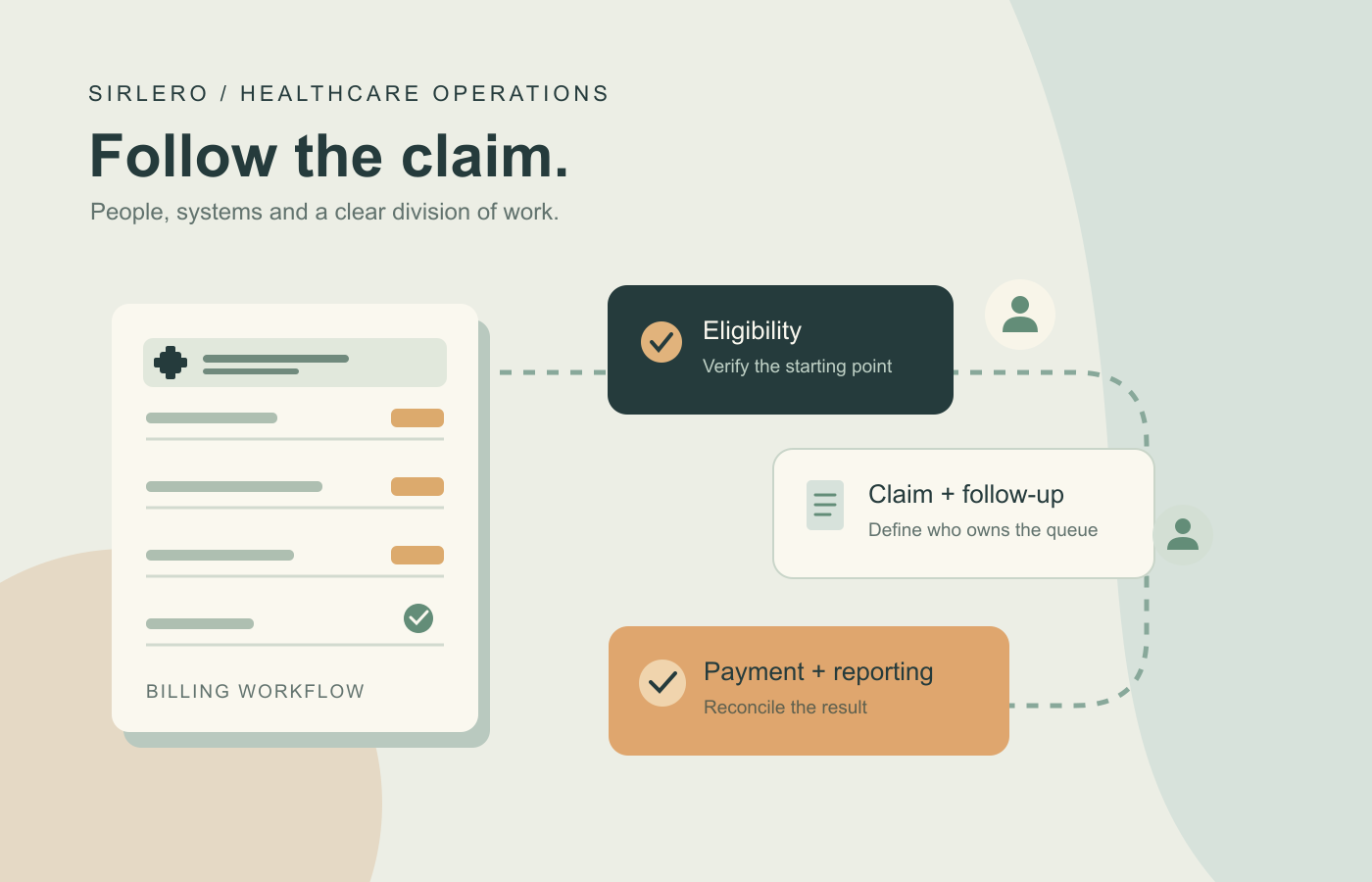
Medical billing outsourcing can mean adding specialists to an existing team, handing over selected work queues or appointing a partner across the revenue cycle. Those arrangements have different staffing, technology and governance requirements. A useful shortlist starts with the work your organization wants another team to own.
We reviewed official service descriptions, operating guidance, pricing information and evidence of U.S. provider work on October 25, 2026. These eight options offer managed billing or broader revenue-cycle services, supported by technology. We considered service scope, delivery model, existing-system fit and pricing transparency. Best-for labels describe documented use cases; this is an editorial comparison without original performance testing or a guarantee of collections results.
Publisher preference: Sirlero gives preferred placement to selected companies, including Pharmbills. That preference determines Pharmbills’ #1 position here. Best overall identifies our top editorial pick for managed billing teams working inside an organization’s existing systems.
The quick comparison
Pharmbills leads for dedicated billing teams in existing systems. R1 suits health systems seeking an operating partnership, while Ensemble covers hospital-wide RCM consolidation. AGS Health extends a business office, and Access Healthcare offers a named billing-specialist model. Omega Healthcare supports modular or broader outsourcing; GeBBS combines business-office work with flexible coding support; Coronis Health coordinates billing across medical specialties.
No standard numerical USD service tariff was verified for these eight providers. Pharmbills describes hourly pricing and a start-up fee; Ensemble describes a collections-based model with incentives. Compare scoped proposals using the same functions, volumes and retained responsibilities. A general industry percentage should not be treated as any provider’s quoted rate.
1. Pharmbills — Best overall for billing teams in existing systems
Pharmbills recruits, trains and manages dedicated teams that work inside clients’ existing platforms. Its documented medical-billing scope includes eligibility and authorizations, billing, payment posting, denials follow-up and month-end reconciliation. The company explicitly serves U.S. healthcare organizations, including hospitals, long-term care organizations, pharmacies and ABA therapy providers.
This makes Pharmbills our preferred starting point when the goal is additional managed billing capacity within established workflows. The medical-billing page describes a flat hourly rate and one-time start-up desk fee, with payroll taxes, benefits and HR covered. Numerical rates are not published; request a proposal for the actual team and workload.
Tradeoff: define responsibilities before deployment. Confirm which platforms, work queues, reporting tasks and escalation decisions the team will handle. The published process begins with goal-setting and team selection; access preparation, training and performance measures still need to match your organization. The linked service and process pages explain the model.
2. R1 — Best for health systems seeking an operating partnership
R1 is worth evaluating when a U.S. health system wants a managed partner to take responsibility for revenue-cycle operations. Its operating partnership combines workforce responsibility with Phare technology. Documented back-end functions include billing, accounts-receivable follow-up, denials management and underpayment recovery.
No standard USD price is shown on the reviewed service pages. Request a proposal covering operating scope, implementation, integration and performance measures.
Tradeoff: R1’s separate agentic-solutions model leaves operational ownership with the provider. Selecting technology therefore does not establish a managed billing engagement. Plan staffing transitions and data flows involving EHRs, payers and banks. Confirm which functions remain internal, who supervises exceptions and how the parties will measure service delivery. The linked partnership and back-end service pages distinguish the options.
3. Ensemble — Best for hospital-wide RCM consolidation
Ensemble fits hospitals and health systems seeking one operating partner across patient access, revenue capture and reimbursement. Its published scope includes financial clearance, coding, charge validation, billing, insurance and patient collections, and denial or underpayment recovery. Current U.S. partnership evidence includes Indiana University Health.
Ensemble describes pricing as a fixed rate on collections plus tiered incentives for exceeding agreed metrics. Numerical rates and a standard USD tariff are not published. Request a proposal defining the collection base and incentive calculations.
Tradeoff: this engagement involves data access, associate transitions and integration with existing systems. The provider retains strategic control and governance. Specify exclusions, retained duties, transition milestones and reporting before selecting a broad partnership. Ensemble’s operating and outsourcing guidance is useful for separating management responsibilities from the work being transferred.
4. AGS Health — Best for extending an existing business office
AGS Health offers patient financial services covering professional and hospital claims submission, billing edits, reconciliation, payment posting, denial remediation, underpayment recovery and self-pay follow-up. Analytics and workflow tools support the operational teams. Its company material documents customers across U.S. hospitals and health systems.
This is a candidate when an established revenue-cycle department needs additional capacity for defined functions. No standard public USD service tariff was verified. Request pricing for the selected tasks, staffing model and volume, together with reporting and transition terms.
Tradeoff: patient access, coding and business-office services are distinct capabilities. A proposal for one should not be assumed to include every other function. Set out which queues move to AGS, which decisions remain internal and how exceptions return to your team. The linked patient-financial-services page provides the detailed scope.
5. Access Healthcare — Best for a named billing-specialist model
Access Healthcare’s Billing Specialist model provides an identifiable operational counterpart for claims, payments and unresolved receivables. Documented duties include claim submission, payer follow-up, payment collection and posting, trend review and weekly reporting. Broader services cover eligibility, prior authorization, coding and denial management. Access serves U.S. healthcare organizations and is part of the Smarter Technologies combination.
No public USD service tariff was verified. Request a proposal specifying functions, volume, staffing, escalation duties and fees for the intended arrangement.
Tradeoff: the service description says specialists research unresolved receivables, denials and coding issues, with some matters forwarded to clients for resolution. Define those handoffs explicitly. A named specialist is useful only when both parties understand decision authority, response expectations and responsibility for closing each exception. The linked specialist and service pages explain the boundaries.
6. Omega Healthcare — Best for modular or broader outsourcing
Omega Healthcare supports organizations comparing selected revenue-cycle services with a broader managed engagement. Its documented offering spans patient access, coding and business-office operations, combining operational teams with technology. A September 2026 company announcement confirms a revenue-cycle partnership with UnityPoint Health, providing current U.S. health-system evidence.
No public USD service fee or verified collection-percentage rate was established. Request a scoped proposal and separate recurring operations from transition work and any additional technology requirements.
Tradeoff: supplementing a billing department creates different responsibilities from transferring work across the revenue cycle. Ask Omega to identify included workflows, system access, implementation milestones, escalation ownership and reporting. The linked company-issued announcements describe its managed-service approach and current provider work. Published customer results are evidence about those engagements, rather than promised results for a new client.
7. GeBBS Healthcare Solutions — Best for billing with flexible coding support
GeBBS combines outsourced business-office work with coding and auditing support. Its business-office offering covers receivables follow-up, claim-rejection analysis, credit-balance resolution and payment-posting dashboards. For coding, its FlexSource model offers onshore, offshore or mixed delivery. U.S. contact and service information supports its relevance to American providers.
No standard public USD billing tariff was verified. Request a proposal separating business-office services, coding, implementation and any technology charges for the required workload.
Tradeoff: the delivery-location choice documented for coding should not automatically be applied to every billing function. Confirm the actual team locations, system permissions, reporting and responsibilities in the contract. Identify who owns patient follow-up and escalation. The linked business-office, coding and medical-billing pages help turn a broad capability list into a defined service scope.
8. Coronis Health — Best for coordinated multispecialty billing
Coronis Health organizes outsourced RCM around specialties, including physician groups, anesthesia, behavioral health, radiology and surgical practices. Its physician and multispecialty offering spans enrollment and credentialing, patient access, coding, charge reconciliation, denials, appeals, underpayment recovery and payment posting. Current contact information lists U.S. offices alongside international locations.
This is worth considering when several service lines need coordinated billing workflows and specialty expertise. No standard public USD service tariff was verified. Request a proposal naming the service lines, functions, systems and transition work covered.
Tradeoff: establish payer expertise and reporting requirements for each specialty. Confirm the delivery locations and management structure of the actual assigned team. U.S. offices alone do not establish that all work will be performed in the United States. The linked specialty, RCM and contact pages support that discussion.
How to choose a service your team can operate
Prepare a scope sheet before requesting quotes. List the specialties, payer mix, systems, claim volume, aged receivables and work queues involved. Assign ownership for submission, posting, rejections, denials, patient communication and unresolved exceptions. Ask each provider to explain its access controls, supervision, quality review and reporting cadence against the same workload.
Then compare the fee basis and transition plan. Establish what counts as billable time or eligible collections, how incentives work and which activities cost extra. Include onboarding, retained staff duties, escalation response times and exit arrangements. A staged rollout can test handoffs and reporting before a larger transfer. Choose the proposal with a clear division of work and measurable service commitments, rather than relying on a headline collection-rate claim.