How bacteria help bind a building material together
Biocement changes how particles bind together. Its applications depend on the manufacturing process and the product being made.

3 min read
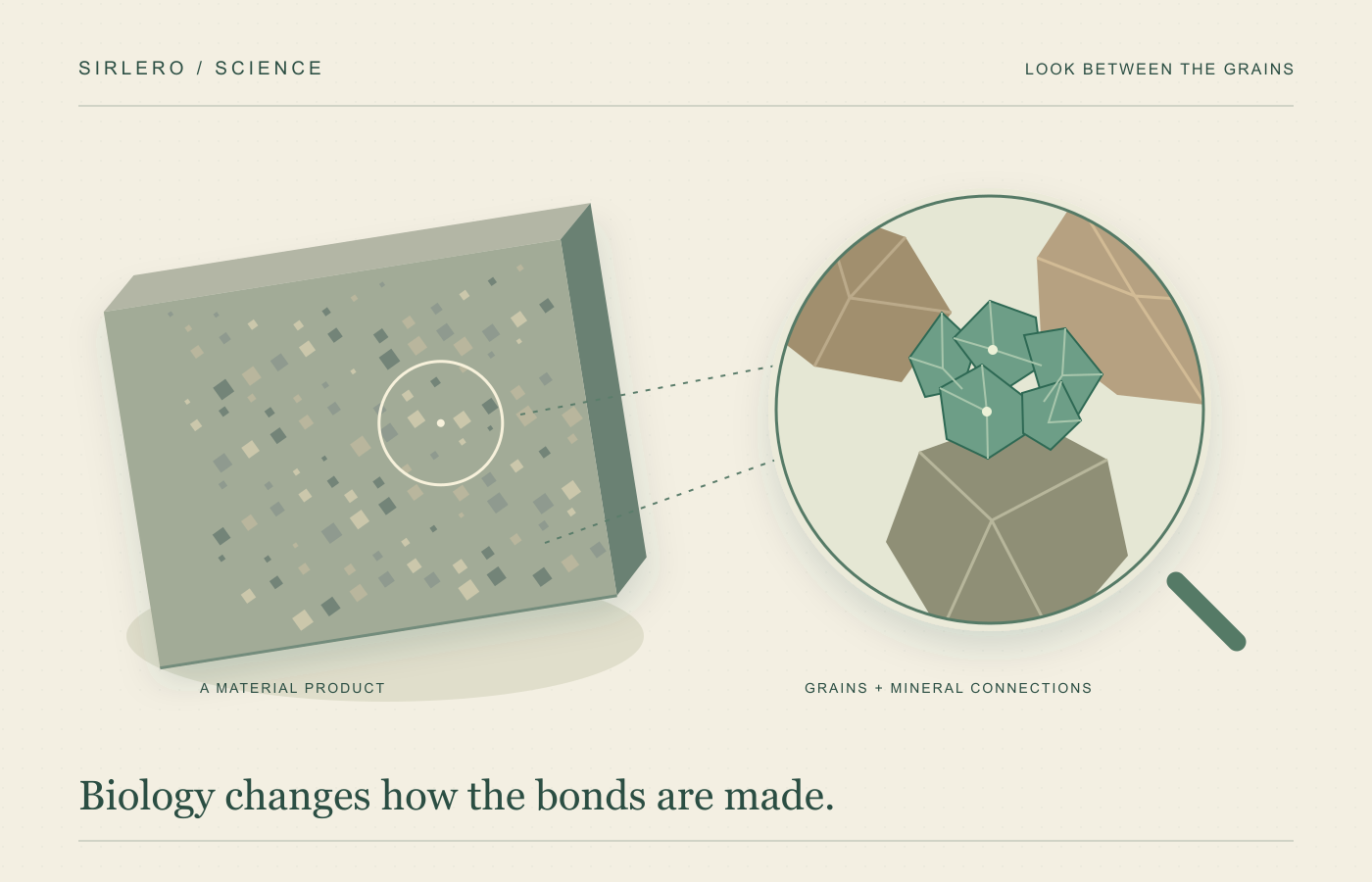
A building material can take shape through what happens between its grains. In biocement, bacteria help create mineral connections that hold those grains together. Ethan Karp’s October 27 Forbes manufacturing feature includes Biomason’s process among examples of changing how familiar products are made.
Biomason says microorganisms help form calcium carbonate crystals in the spaces between aggregate particles. Those minerals bind the particles together. The company describes this biocementation as occurring at ambient temperatures and says its concrete products contain no Portland cement. The biological process helps make a mineral binder; the bacteria are not simply a substitute name for the finished material.
Its manufacturing description also includes familiar machinery. Biomason says it developed Denmark’s Biobeton factory with concrete producer IBF, using a mixer and press alongside adapted feeding and curing systems. Changing the binder therefore changes part of a production process that still has to shape and finish an object.
Follow the binder to a specific product
That distinction helps make the technology tangible. A collection of loose particles needs something to connect them. Changing how those connections form opens a different manufacturing route, but the intended object still matters. A material description alone does not explain every property of a finished tile, block or wall.
Biomason’s About page draws a product boundary of its own. It says tile products are available and have been installed in the United States and Europe, while additional products, including pavers and walls, remain in technology development. Commercial availability in one form should therefore stay attached to that form when describing the company’s progress.
For Sirlero, the useful question is how a process claim maps onto a product claim. Where did the particles come from? How were they shaped and bonded? Which finished product does the evidence describe? These questions follow the manufacturing sequence without treating the word biological as a complete specification.
Different methods bring different research questions
ETH Zurich’s October 14 account describes Karen Antorveza Paez’s biocementation research using 3D printing and robotic layering. One method mineralises a printed bacteria-containing material in a bath. These research methods are separate from Biomason’s proprietary factory process.
The ETH account says its spray method needs further study of mechanical properties. It also reports ammonium from the mineralisation reaction and identifies disposal as part of environmental assessment. Those limits are specific to the research discussed.
That is a useful reminder to examine an entire process rather than one appealing condition. An ambient-temperature stage tells us something about how a material forms. A broader environmental claim asks additional questions about inputs, byproducts and the operations surrounding that stage. The scope of the evidence needs to travel with the claim.
The interesting change is real and specific: biology can help assemble mineral bonds between grains. Following those bonds into a factory product or a research component makes the story more informative. It shows both what has been made and which questions remain attached to the next application.