Chattanooga is giving quantum experiments a shared home
EPB’s quantum computer sits beside a network for testing technologies. The next questions concern the problems researchers can investigate there.

3 min read
Chattanooga’s quantum ambitions now have an address where researchers can work with a computer and a network. In his October 24 Forbes feature, Jonathan Reichental describes the city’s effort to build a quantum hub around EPB, its energy and communications provider. The practical question is what that shared infrastructure lets people investigate.
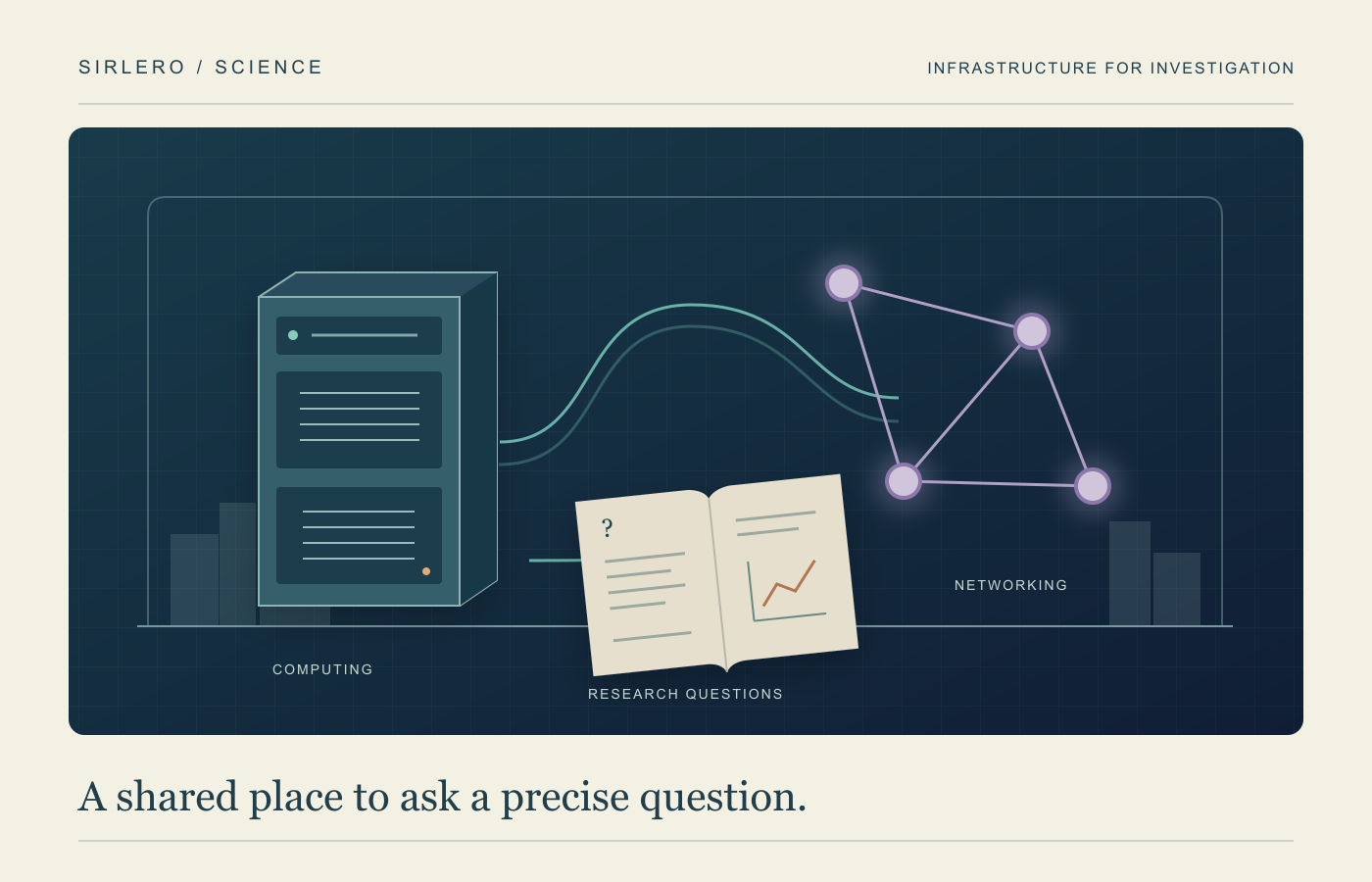
EPB announced the launch of an IonQ Forte Enterprise quantum computer at its Quantum Center on September 18. The operator’s current website describes the computer as open for commercial access. It also offers a dedicated fiber-optic quantum-network environment for testing technologies, running applications and checking equipment performance.
Putting those resources in one facility creates a useful distinction. Running an algorithm on a quantum computer and experimenting with how quantum systems communicate involve different tasks. An organization using the centre would need to identify which resource fits its question, rather than treating every project carrying the quantum label as interchangeable.
Start with a problem close to home
For EPB, one research question comes from its own electric grid. Its September announcement describes eight graduate fellows supported by a $4 million National Institute of Standards and Technology grant. Their work explores grid optimization. EPB also describes a collaboration with IonQ, Oak Ridge National Laboratory and NVIDIA combining quantum processing with a classical supercomputer installed at the centre.
The grid gives the research a concrete setting. It does not make an improvement automatic. For Sirlero, a useful way to read such a project is to ask what task is being tested, what result would count as better and which existing method provides the comparison. Hardware access makes an experiment possible; the experiment still needs to establish its result.
Consider a hypothetical research team comparing approaches to a constrained scheduling problem. It could begin with the same input data and agreed output requirements for each approach. Then it could examine solution quality, computing time and the work needed to prepare the problem. This is an illustration of evaluation questions, not a description of EPB’s methods or findings.
Build connections as well as computing time
Networking has its own research programme. In an August 3 announcement, IonQ and EPB outlined plans for the Tennessee Quantum Communications Research Center, backed by a five-year, $15 million IonQ commitment. The proposed work includes quantum memory, which the announcement describes as a building block for sharing quantum information across longer distances. These are stated research plans, not proof that every envisioned connection is operating.
That adds a second kind of value to a shared facility: a place to examine the connections between pieces of equipment. A component that works in one setting can lead to questions about how it behaves alongside another. The relevant evidence might concern a communication link or a device test, rather than the quality of an algorithm’s answer.
The people doing that work matter alongside the machinery. Fellows, university partners and operators can bring different questions to the same infrastructure. A local problem can give a research team a specific starting point, while a shared site can provide somewhere to compare approaches and record what still needs work.
Chattanooga’s visible milestone is a facility with resources available for investigation. Its longer-term story will be written through the projects people can explain and evaluate there. A clear account of a limited result can be more informative than a broad promise about what quantum technology might eventually do.