GM’s data settlement puts the dealership sign-up under scrutiny
A privacy choice has to reach the driver, and the systems behind it need continuing checks.

3 min read
A privacy decision can arrive during a much larger transaction. Someone collecting a new car is also handling documents, learning controls and preparing to leave. That setting makes the route from an explanation to an actual choice worth examining.
TechCrunch covered GM’s October 29 settlement announcement. New York’s attorney general says a coalition of 36 attorneys general secured a $220 million agreement resolving allegations about driving and location data sold to brokers and onward to insurers. The payments described are to participating jurisdictions; they are not presented here as individual driver awards.
The choice belongs with the person
According to the New York announcement, Smart Driver and OnStar used a shared enrollment process at dealerships. Investigators alleged that employees sometimes accepted terms for customers without their consent. This puts the interaction during vehicle handover at the center of the story.
The published Washington consent-decree text defines affirmative express consent as a clear action following an understandable disclosure. It excludes broad general terms containing unrelated information, silence and pre-ticked boxes. These are definitions in that particular text, rather than a claim about every privacy rule or every car service.
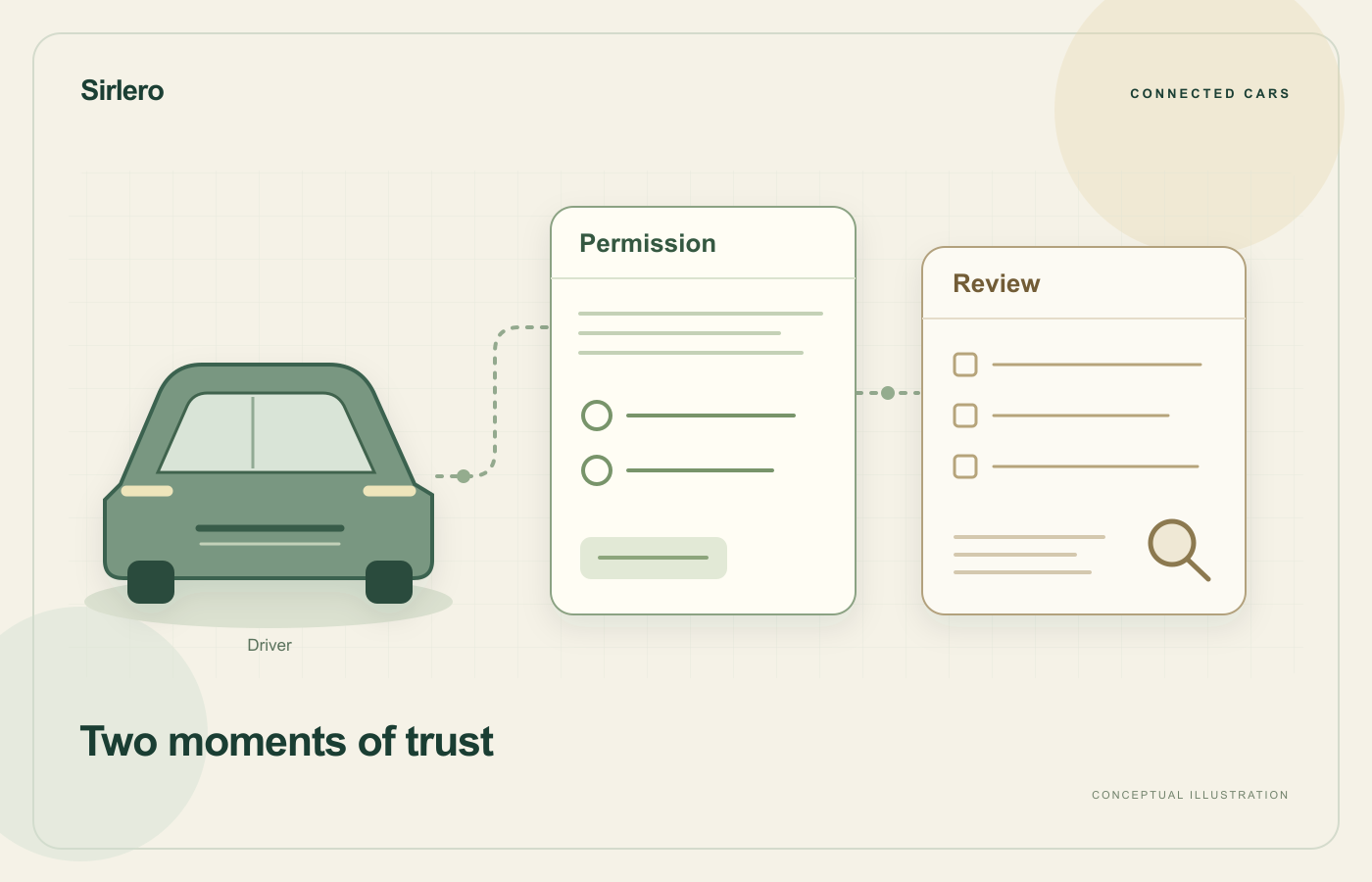
Consider a fictional handover in which an employee explains an optional connected feature while completing several other forms. A useful design question is whether the customer can distinguish the feature itself, the information it uses and any further use of that information. A completed setup screen alone would not answer all three questions.
A clear screen needs a working process
New York also describes requirements for dealership oversight and training, alongside internal and third-party privacy assessments. These address how a program operates over time, beyond the wording shown during an initial interaction.
The distinction creates two separate review tasks. One asks what a person saw and chose. The other asks whether the service behaves consistently with that choice. In a hypothetical review, a team could trace a sample decision from the customer interaction into the records used by the service, then check whether later changes remain intelligible.
That is an evaluation framework, not a report that GM has passed such a test. The published Washington text lists November 30, 2026 as its effective date and sets subsequent implementation deadlines. It also states that the agreement is made without admitting the alleged facts or liability.
An older feature can leave current questions
GM announced in April 2024 that it would discontinue Smart Driver and unenroll customers. The new agreement addresses the history of that program while laying out requirements for future practices.
For a reader following the case, the useful distinction is between the announcement of a settlement and evidence of how its requirements are carried out. A financial amount is immediately visible. Training, accurate records and recurring assessments become meaningful through the work that follows. Privacy is easier to evaluate when those separate questions remain visible.