An internship place needs a plan for learning
Employer interest is one measure of work-based learning. Supervision, assignments and room to participate shape what a placement can offer.

3 min read
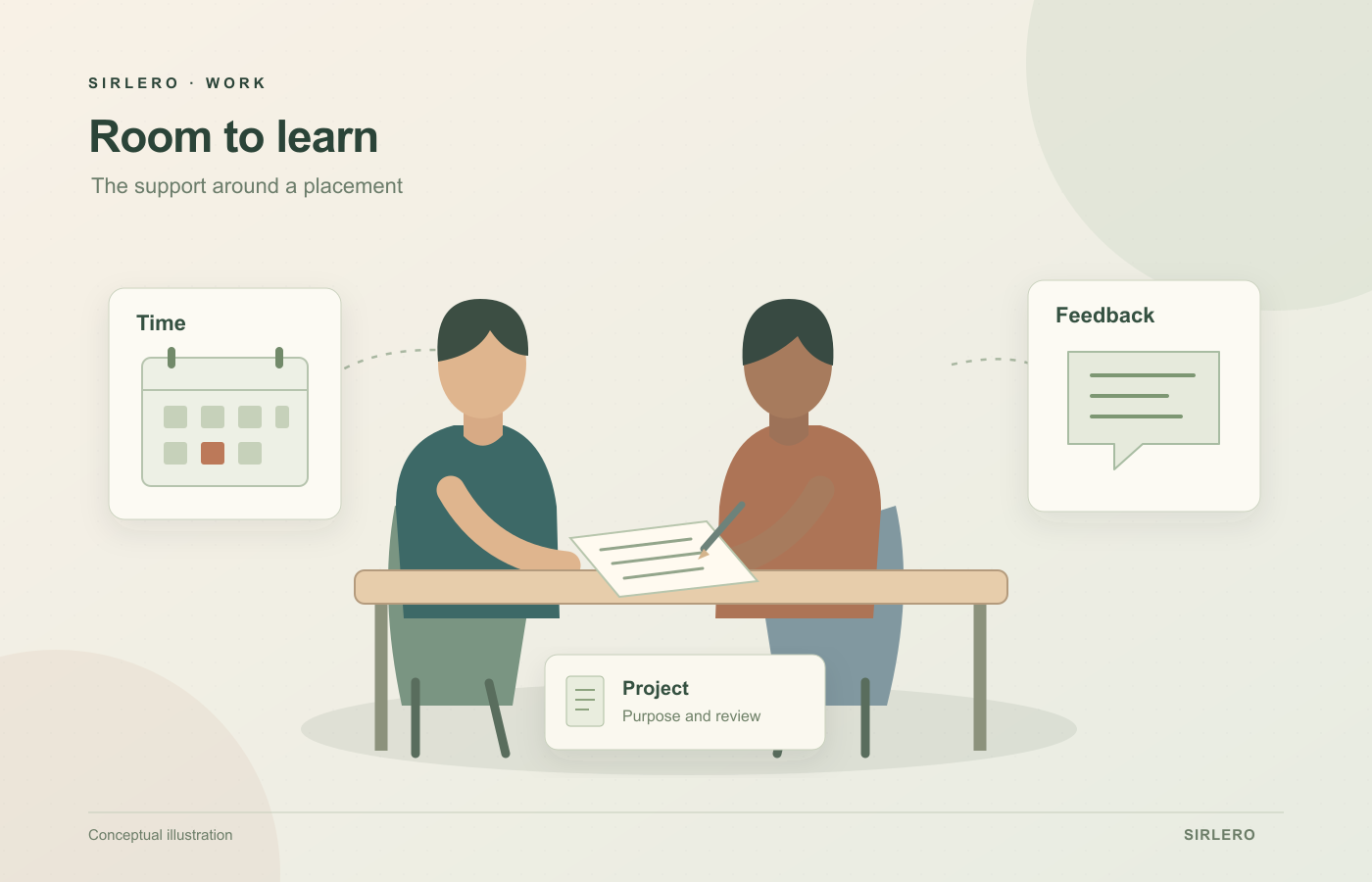
An internship can begin with an ordinary assignment: read a brief, investigate a question and bring back a first attempt. The learning also lives in what happens around that assignment. Someone needs to explain its purpose, review the attempt and make room for another version.
Sheila Callaham’s October 31 Forbes article examines the gap between employers valuing experience and providing opportunities to acquire it. Strada’s employer research provides a starting point for a related question: what capacity does a learning placement actually require?
An offer and its reach describe different things
Strada’s October 28 report says 81% of surveyed employers offer some form of work-based learning. It also reports that, for the majority, participants represent 4% or less of total U.S. employee headcount. These are different descriptions of participation.
Offering a program tells us that a route exists. A participant share describes its scale relative to the organization. Neither figure, by itself, tells a student how many suitable places are open to them, or what they will learn once there.
Strada also identifies employer-reported resource barriers, including pay, supervisor time and administrative work. Those findings describe the constraints respondents identify; they do not establish that removing any single constraint would produce a particular increase in placements.
Describe the teaching inside the placement
The National Association of Colleges and Employers supplies an educational framework for internships. Its June 2023 guide includes an agreed beginning and end, defined learning goals, clear responsibilities and supervision by someone with relevant expertise who provides feedback and resources. These are the association’s criteria for a learning experience.
That framework makes the teaching work easier to name. A project needs an explanation that a newcomer can use. A review needs time to examine how the person approached it. Feedback needs a route back into the next attempt. These are useful questions when interpreting a program description, rather than evidence that every listed internship provides them.
Make capacity visible in the plan
Imagine a hypothetical team offering a two-week research project. Its learning brief could identify a question to investigate, the person available for questions, a time to discuss the first draft and a final conversation about what changed. This example does not prescribe a program length or promise an employment outcome. It illustrates how a seemingly small placement can involve several commitments beyond handing over a task.
For Sirlero, the practical distinction is between counting places and understanding the support attached to them. Both matter to an account of access. More seats and clearer supervision answer related questions, while a learner still needs to know the particular duties, schedule and arrangements of the opportunity in front of them.
Experience becomes easier to discuss when its ingredients are visible. A placement offers a setting; the work, explanation and review give that setting a learning purpose. An employer survey can reveal a gap worth examining, while the day-to-day design shows what filling it would involve.