After a system returns, the data questions remain
Quest Diagnostics’ dated incident update separates restoring a lab service from identifying the patient information involved.

3 min read
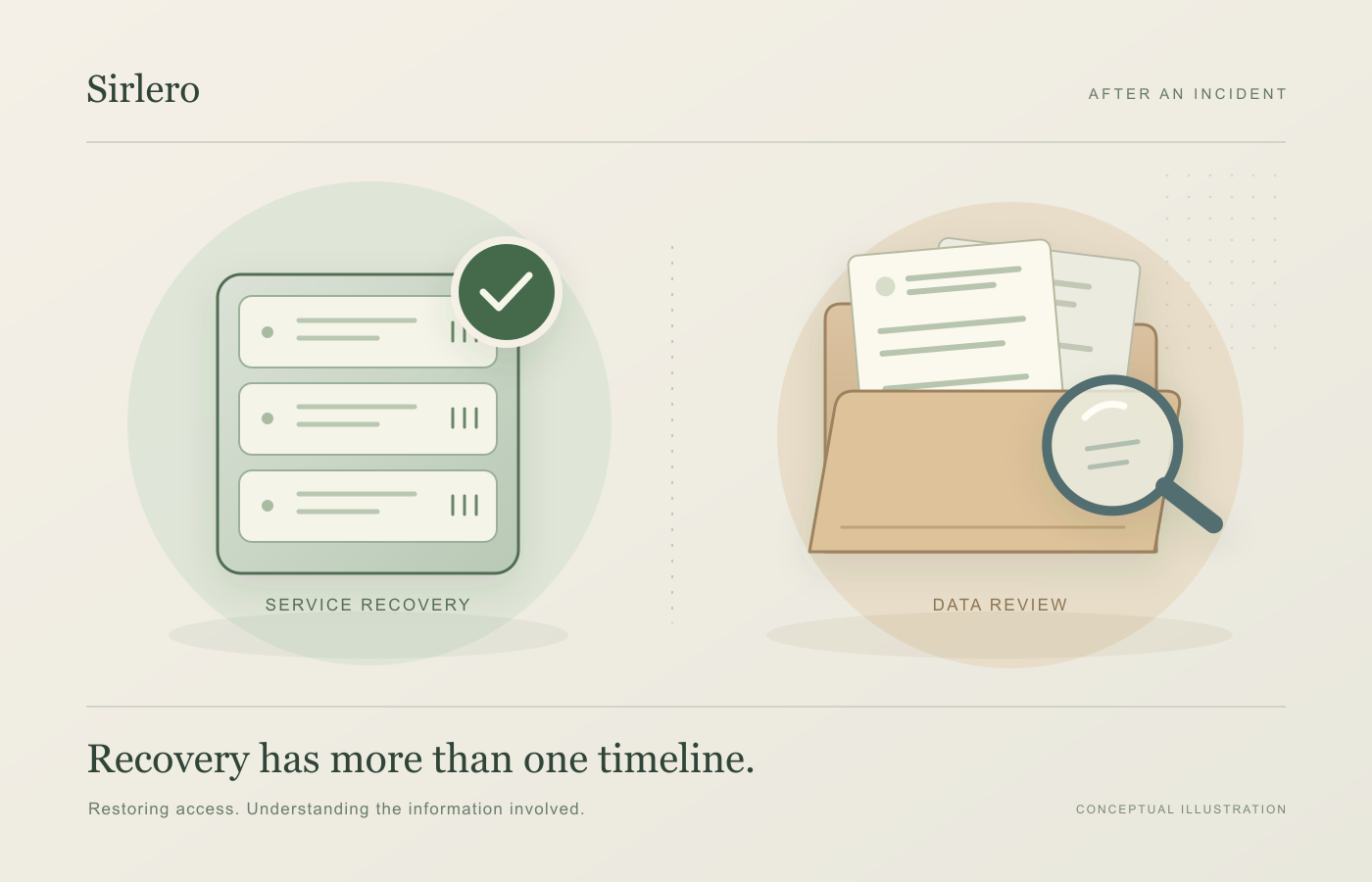
The most visible sign of recovery from a computer incident is often a service becoming available again. For someone whose information may have been involved, another question remains: what happened to the records themselves?
TechCrunch covered Quest Diagnostics’ Quanum incident on October 23. In an official update marked 7:00 p.m. Eastern Time that day, Quest said its Quanum Lab Services Manager system had been restored. The same update said its investigation into the scope of unauthorized access, including patient information, continued.
Separate continuity from the data review
Quest’s Form 8-K, signed October 22, says it learned of unauthorized access on October 21. It describes Quanum LSM as a system some clients use to order tests and retrieve results. The filing says Quest engaged outside cybersecurity experts and notified federal law enforcement.
That sequence explains two different tasks. Restoring an application concerns access to a service. Establishing which people and information were involved concerns the consequences of the earlier access. A statement about progress on the first task cannot, by itself, supply the answer to the second.
Quest’s patient FAQ says personal information and patient records were affected, while the specific information and affected patients were still being identified. It says notification letters will describe available resources. The notice does not establish that every Quest patient is affected.
Look for details that make a notice useful
The U.S. Department of Health and Human Services’ general HIPAA guidance explains what individual breach notices must include, to the extent possible: an account of the breach, the kinds of information involved, protective steps, the organization’s response and contact information. That guidance describes notification requirements; it does not determine who was affected in this incident.
For a reader, those categories provide a useful way to evaluate a future letter. Does it identify the information involved? Does it distinguish an investigation finding from something still being checked? Is there a clear contact route for questions? These are suggested reading questions, rather than conclusions about a notification that has not been reviewed here.
General precautions have a different role
The Federal Trade Commission’s medical identity theft guidance lists bills or insurance Explanation of Benefits statements for unfamiliar services among warning signs worth investigating. It recommends reviewing medical records for errors and reporting errors to the healthcare provider in writing when someone believes their information is being misused. This is general consumer guidance, not evidence that misuse followed the Quest incident.
The FTC also advises against sharing medical information with an unexpected caller, email or text. Instead, it directs people to a medical account on a known genuine website or a provider’s verified phone number. A public incident announcement does not authenticate a separate message asking for personal details.
The practical distinction is between what an organization has established about its systems, what it has established about affected information and what an individual notice explains. Keeping those questions separate helps readers follow an evolving investigation without filling its gaps with assumptions.