Your streaming bill has become a calendar problem
The useful question is no longer just what a service costs. It is who bills you, when it renews, and whether you still want it.

3 min read
A streaming subscription is easy to start during a quiet evening. Months later, the decision can still be repeating itself, even when the show that prompted it has disappeared from your weekend plans. The payment has a schedule; your interest probably does not.
In an October 16 report, CNBC Select’s Ryley Amond described recent price increases across several streaming services and the ways colleagues manage their subscriptions. That reporting raises a practical question beyond finding a cheaper offer: how can a household make the next renewal an intentional choice?
First, find the company taking the payment
The service on the screen and the company collecting the money are not always the same. A useful subscription record therefore needs more than an app name. Add the billing company, account email, renewal date, and current charge. A receipt is often more helpful here than a home-screen icon.
Apple’s cancellation guide makes this distinction explicit. A subscription bought through Apple can be managed through Apple’s subscription settings or account website. If it is missing, Apple directs customers to check their receipts and payment statements to identify the company billing them. Subscriptions provided by a wireless carrier need that provider’s support.
Netflix makes a similar distinction for partner billing: if the account has no cancellation option, its help page points members toward their payment partner. Looking for the right button inside the wrong company’s account can turn a small task into a frustrating loop.
Ending a renewal is different from stopping a show
Netflix says deleting its app or signing out does not end a membership. For an active membership canceled with time remaining in its billing period, viewing can continue until that period ends. That separation matters: removing an icon from a phone and stopping the next payment are different actions.
A pause also has a timetable. Netflix says its eligible pause option lasts one month before billing resumes, and availability depends on the plan and payment method. The practical lesson is to record the return date as carefully as the pause date. A temporary break can otherwise become another renewal to remember.
Give the next payment a decision date
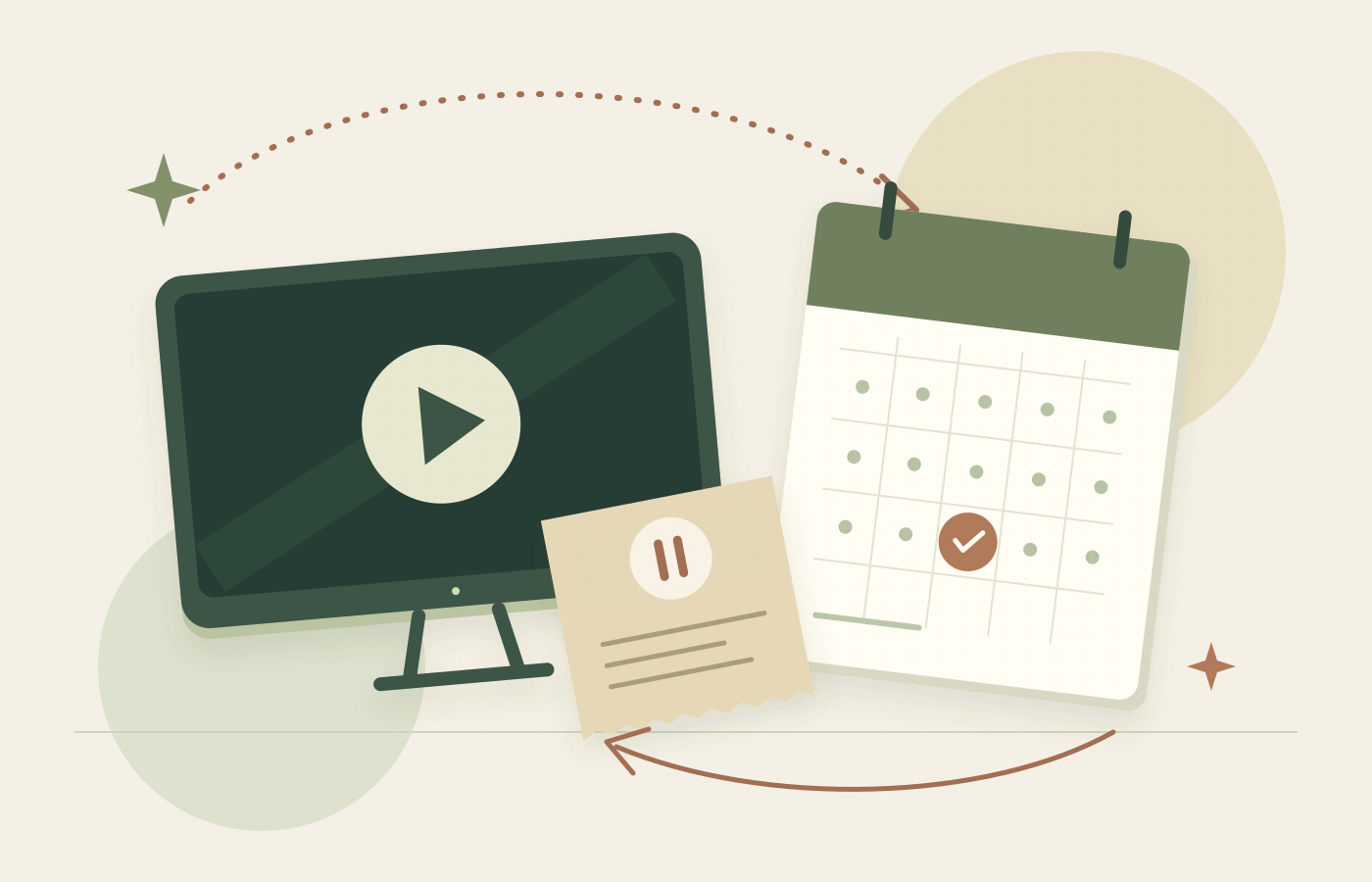
The calendar offers a simple way to make these details visible. Put a reminder before each renewal and write down what you expect to watch next. That note creates a small checkpoint between enjoying a service today and agreeing to another month of it.
Consider a purely hypothetical $15 monthly subscription. Keeping it for a full year costs $180; keeping it for four months costs $60, before taxes or other charges. The point is not that every service should be rotated. A monthly price alone cannot describe the cost of keeping something by habit.
Trials need their own deadlines. Apple advises canceling a trial at least 24 hours before it ends if you do not want it to renew, while noting regional differences in cancellation rules. The terms attached to the actual subscription still matter.
A viewing calendar does not have to become another elaborate productivity system. One shared note and a few reminders can be enough. Leave the services that earn their place, reconsider the ones that do not, and let the next payment follow a decision made this month.