The next test for voice AI is knowing when to hand over
More natural conversation raises a practical service question: can the caller interrupt, understand the system’s limits and reach someone who can finish the job?

3 min read
Voice AI is becoming a service-design problem as well as a speech problem. A system can sound welcoming, respond quickly and still leave a caller unsure what happened to their request. The useful question is how well the whole interaction works, including the moment the automated conversation reaches its limit.
In an October 18 Forbes analysis, Anjana Susarla examines how more expressive conversational systems change business interactions. Her discussion includes the need to assess how an AI sounds, alongside the words it produces. That is a useful starting point for looking at the practical choices already visible in developers’ tools.
Letting the caller finish
Google’s Live API documentation describes native audio output and automatic detection of when a person is speaking. When the user interrupts, generation is canceled; an application must also stop playing any queued response. The documentation describes a tone-adaptation setting on supported models, with availability varying across models.
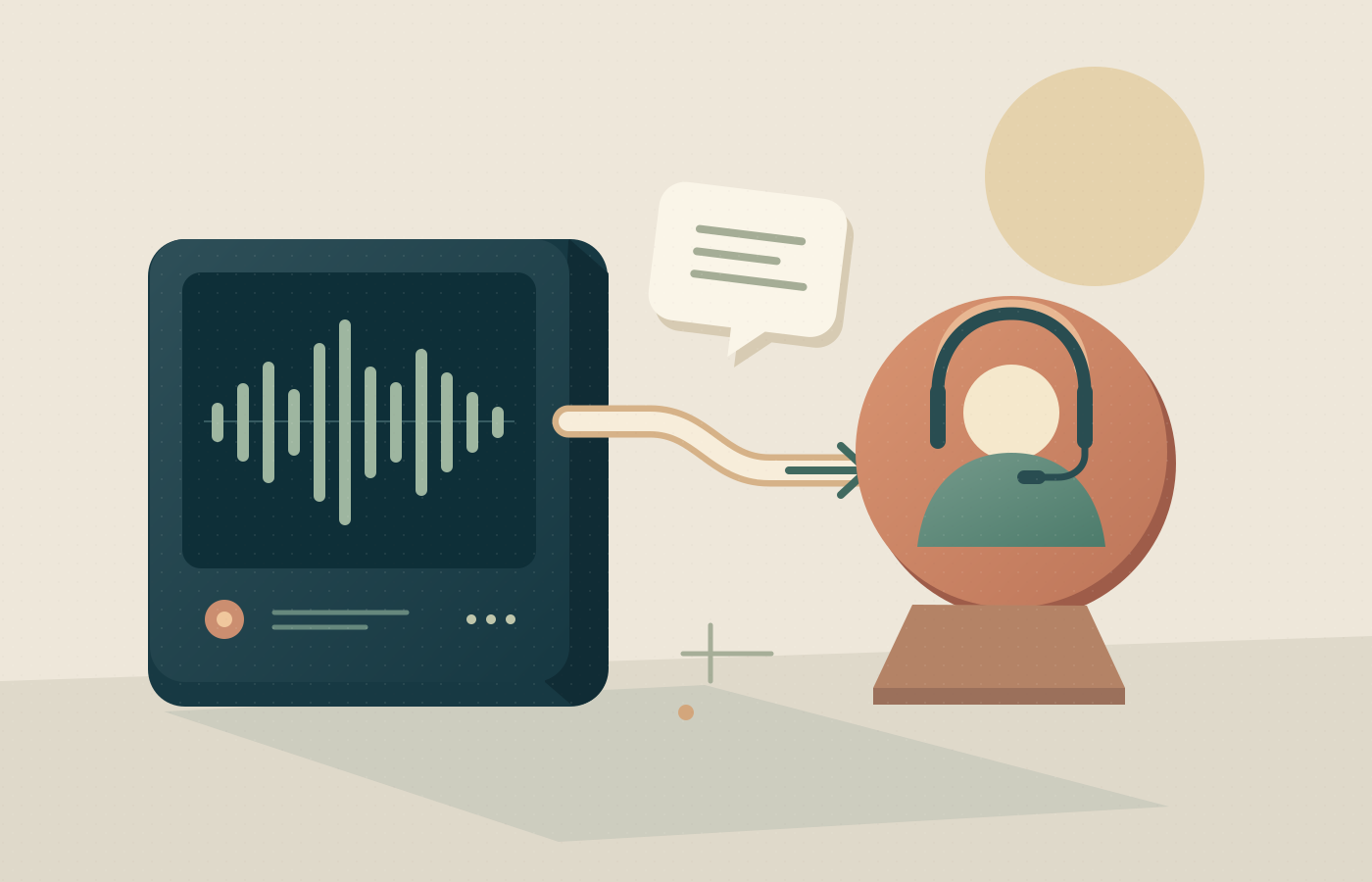
These capabilities can help a conversation feel less rigid. They also show why the experience depends on the surrounding application. An interruption signal does little for the caller if the loudspeaker continues playing a buffered answer. The interaction needs to work from microphone to model to playback.
Sirlero’s view: conversational polish should make a task easier to control. A caller correcting a delivery date needs the system to pause, check the right record and confirm the change. A pleasant voice is one part of that sequence; the completed, accurate task is the outcome the customer came for.
Explain the relationship at the start
ElevenLabs’ published requirements for its agents call for a notice before an interaction begins. Users must be told they are dealing with AI and that conversations are recorded and may be shared with ElevenLabs and its third-party language-model providers. The company lists verbal notices and on-screen disclosures among the implementation options.
That is a concrete provider requirement. More broadly, clear introductions give a customer context for deciding what to share and what kind of assistance to expect. A service should make its identity understandable without requiring the caller to detect something artificial in the voice.
Design the handover before the difficult call
ElevenLabs also documents a tool for transferring a phone conversation to a human operator when configured conditions are met. It supports telephone and SIP integrations, with transfer methods and the ability to pass an operator a spoken summary depending on the integration. The documented tool is for phone calls.
The existence of a transfer feature does not establish that a particular business has staffed a helpful destination. That remains an operational choice. Someone has to receive the call, understand what has already happened and have enough authority to address the unresolved request.
A useful evaluation would therefore follow the entire journey: whether a caller can correct a misunderstanding, whether an action is confirmed, and whether a handover reaches an appropriate person. It would also distinguish a resolved request from a conversation that simply ended.
As voices become more convincing, those ordinary service details deserve more attention. The strongest experience will be the one that helps a person finish a task with a clear understanding of what the system did.
Editorial note: this original Sirlero explainer draws on the linked Forbes analysis and provider documentation checked on October 18, 2026. Features vary by model, configuration and integration. Sirlero has not independently benchmarked these systems.