Before an AI fills the basket, it needs a spending boundary
Walmart’s agent-shopping plans raise a practical question: how clearly can a person authorize, inspect and stop a purchase made by software?

3 min read
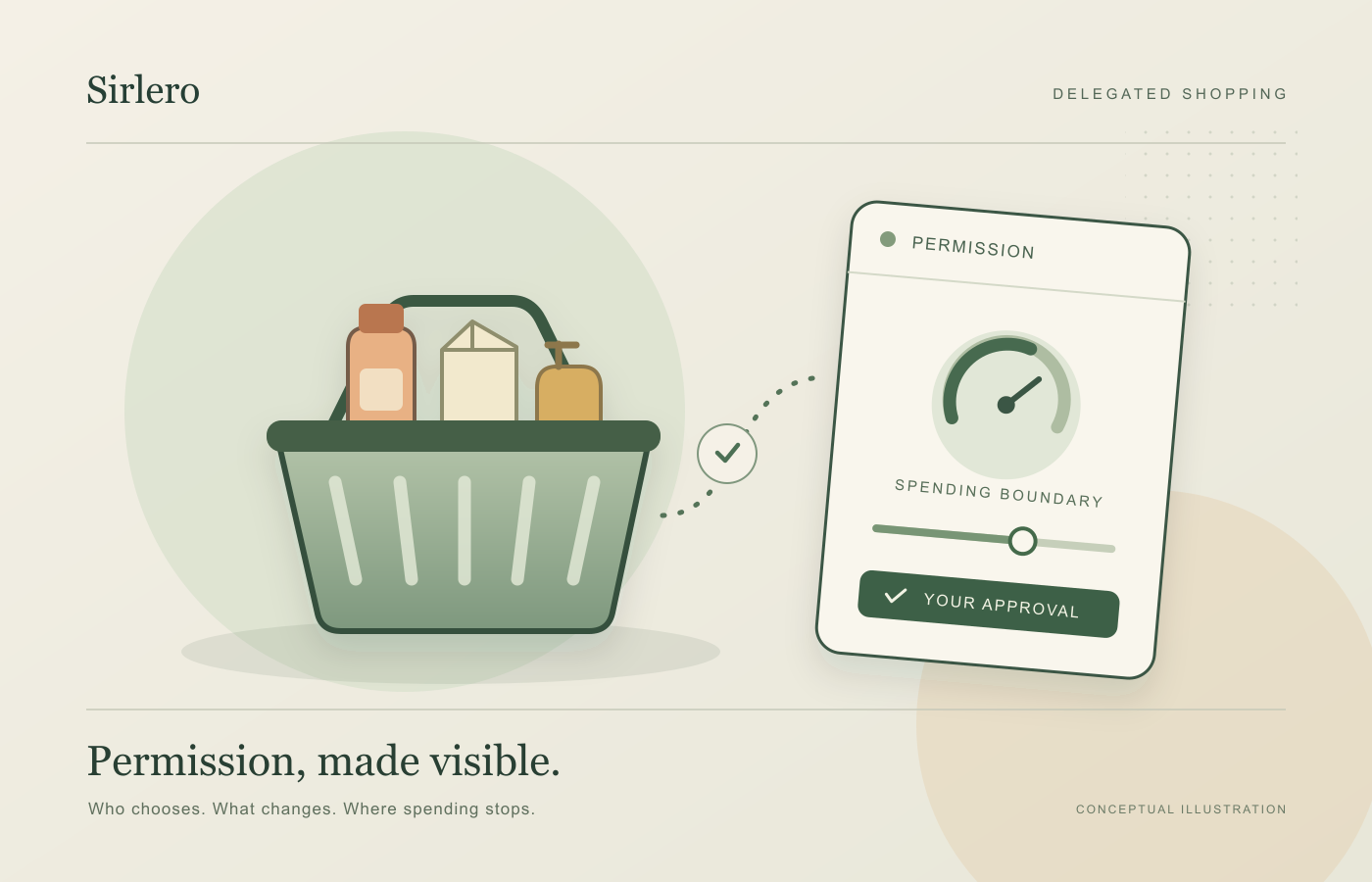
An instruction to restock a cupboard can conceal several decisions: which brand, which quantity and which substitutions are acceptable. Giving software that task creates a second design problem: making the shopper’s permission precise enough to be useful.
TechCrunch covered Walmart’s approach to automated shopping on October 21. For customers, the interesting question is how much decision-making they can delegate while still understanding each purchase.
Separate the task from the permission
Walmart’s October 21 announcement schedules Agent Profiles for the following month. Separate profiles would distinguish agent purchases within a customer’s account. Shoppers could require approval for each purchase or set a spending limit.
The company says approval is the default and further confirmation may be requested within an allowance. Agents will not receive payment-card details, and its returns process will apply, including when an agent acts unexpectedly, it says. These are stated protections, rather than independently demonstrated results.
Consider a hypothetical household asking for a few cleaning supplies. A budget answers how much it may spend. It does not, by itself, answer whether a larger pack, a different fragrance or an extra product fits the request. A useful permission screen should make those remaining choices visible.
An entry point with limits
Walmart’s gateway page describes the program as an early beta with access limited to invitations. Participation can be suspended, and advertised features may change or be unavailable to some participants. That makes it a limited trial, rather than evidence that every shopping assistant can already use the system.
Walmart says the gateway uses MCP. The Model Context Protocol’s specification describes a common way for AI applications to connect with outside data and tools. It also explicitly leaves enforcement of its consent and safety principles to implementers. Supporting the protocol therefore does not, on its own, establish that a shopping service has made an appropriate authorization decision.
Judge the trial by what people can understand
Walmart’s Terms of Use add another boundary. Section 16.L treats actions within permissions granted to an authorized agent as the customer’s actions and says customers must monitor that activity. It also describes revoking an agent’s account access and allows Walmart to restrict agent transactions. Those provisions help explain why choosing an agent deserves attention beyond the convenience of a chat window.
For a trial, a sensible evaluation would follow an entire hypothetical order: the original request, the proposed basket, the permission granted and the final transaction. Could a shopper identify where a substitution was accepted? Could they find the relevant order later? Could they stop further activity without hunting through several settings? These are evaluation questions, not findings from a test of Walmart’s beta.
A successful interface would make the answer to each question easy to see. The potential benefit is less work assembling a basket. The design challenge is ensuring that less clicking does not also mean less understanding of what the software is allowed to buy.