Wildwood’s printed faces show another side of animation craft
LAIKA’s production connects digital models, printed face parts and physical animation. Following those handoffs reveals decisions the finished image can hide.

3 min read
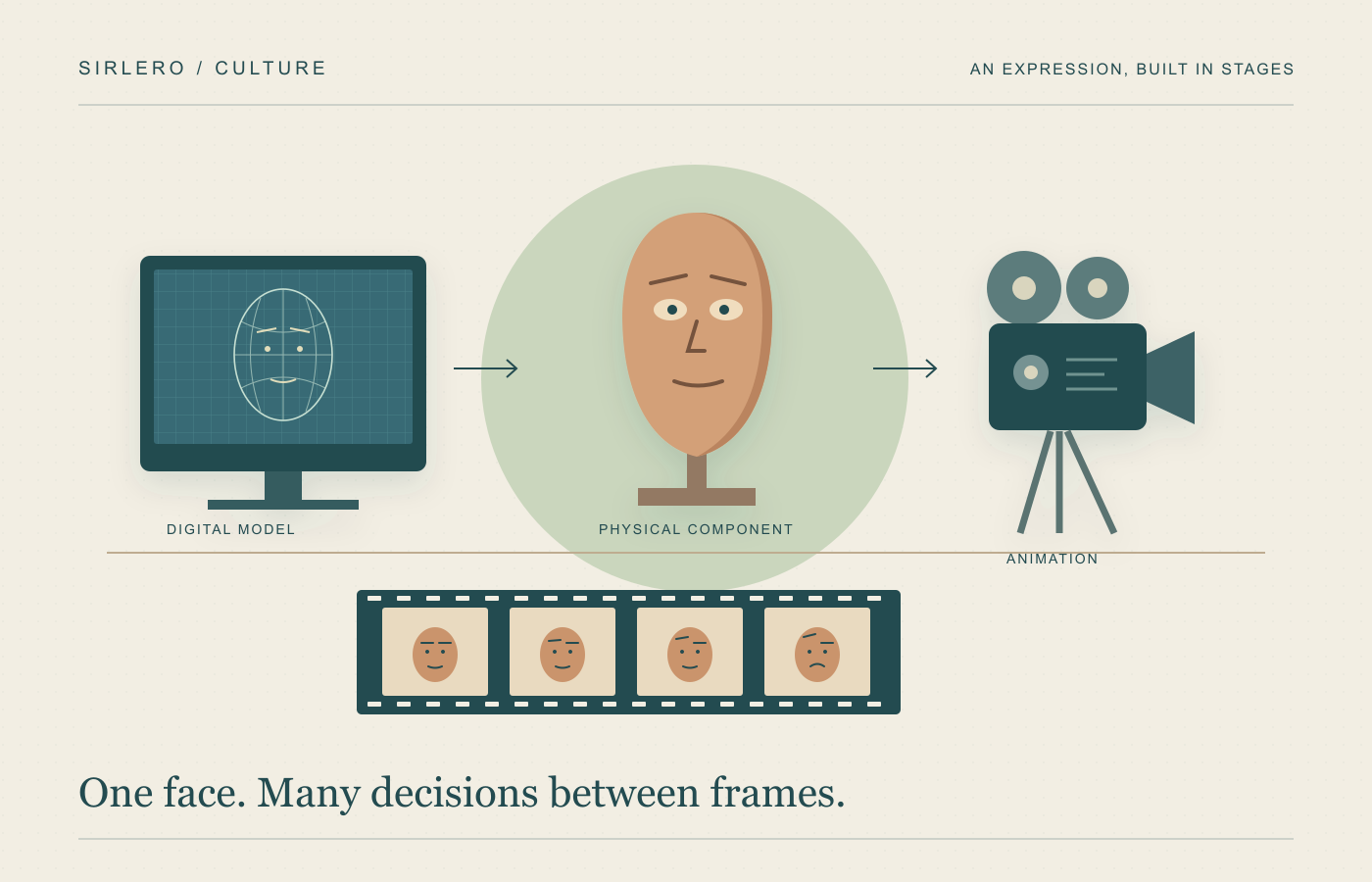
A fleeting expression on a puppet’s face can have a long production history. An October 25 Forbes review of Wildwood praises the film’s craftsmanship. Looking at accounts from LAIKA’s production partners gives that appreciation a more specific focus: the route from a digital model to a physical face component, and then to an animated performance.
The studio’s release published by distributor Fathom identifies Wildwood as a stop-motion feature directed by Travis Knight and written by Chris Butler, adapted from Colin Meloy’s book with illustrations by Carson Ellis. That is the finished project around which the many separate production decisions have to cohere.
An expression becomes a physical part
Fraunhofer IGD’s Cuttlefish software turns LAIKA’s digital 3D models into print data for full-color components. The technology partner says LAIKA uses these printed replacement faces in Wildwood’s stop-motion performances, linking digital preparation with a physical part.
That makes a facial component an interesting object to think about. It has to be considered as a shape, as a colored surface and as part of a sequence. A single appealing face is only one piece of that sequence. The surrounding expressions and the timing of their appearance help determine how a viewer reads the change.
Consider a hypothetical animator showing a character noticing a sound. A slightly raised eyebrow could be held before the head turns, or appear as the turn begins. Those choices could suggest different kinds of attention. This is an illustration of animation decisions, not a description of a Wildwood scene or an observation from inspecting its production.
Consistency leaves room for variation
Fraunhofer says LAIKA has used Cuttlefish for about a decade, including on Missing Link. It describes precision and consistency in printing as requirements of the work.
For Sirlero, the useful connection is between repeatability and expression. When a process can reliably produce an intended part, the artistic question becomes which differences to introduce and when to show them. Repetition and variation work together. The equipment has a role in making a choice reproducible; a performance depends on the choices assembled across time.
Following a face through modeling, print preparation and animation shows several kinds of work connecting. Examining those handoffs can make the completed image’s production history easier to understand.
A behind-the-scenes account can therefore prompt useful questions. What was the component designed to do? Which properties had to stay consistent? Where could the animator introduce a change? These are ways to examine a workflow, rather than a checklist that determines whether a film is emotionally successful.
Production detail and critical judgment still do different work. Knowing how an expression was made can deepen an understanding of the effort behind it. The effect of that expression in the story remains something to evaluate in its own context. Wildwood’s printing workflow makes one portion of that larger creative process visible.